Licence checkFree · about 2 minutes · no account, nothing stored
Check a shipping company's license before you hand over your cargo
Two federal databases answer two different questions, and a company worth trusting with cargo is checked in both. Each search is public, free and needs no account:
- Who may arrange your ocean carriage — the FMC register of ocean transportation intermediaries. About two minutes. It held 9,795 organizations on 07/27/2026.
- Who may move the cargo by road inside the US — FMCSA, on the USDOT number. About two minutes, and it says nothing about the sea leg.
- Ask for the number first, then read it in the register — not on the company's own page, where a cloned site shows someone else's licence.
- Search the entity that issues the bill of lading, by company name and by trade name: one licensee can operate under several.
- A missing licence number is not always a finding. A registered foreign-based NVOCC legitimately has none, and posts a $150,000 bond instead of $75,000.
What an FMC license is and what it authorizes
An FMC license is the authority the Federal Maritime Commission grants to an Ocean Transportation Intermediary, and a US-based company must hold one to arrange ocean cargo movements for you. The Federal Maritime Commission recognizes two kinds of intermediary, and the difference decides who is responsible when a container goes missing:
- Ocean Freight Forwarder (OFF) — acts as your agent. Books space, prepares documentation, arranges clearance. Does not take on carrier liability.
- NVOCC — acts as a carrier toward you and as a shipper toward the vessel operator. Issues its own bill of lading and publishes its own tariff, and assumes carrier liability.
An FMC license is mandatory for both categories when the company is based in the United States. The Commission's own definition ties the license to proof of financial responsibility, and for NVOCCs also to a reported tariff publication.
Using an unlicensed intermediary is not a victimless shortcut. The Federal Maritime Commission has authority to act against companies arranging ocean transportation without a license, and a shipper left with a claim against an unlicensed operator has no bond to claim against and no US license record to identify the responsible party.
An FMC license is not a quality rating, and the requirement behind it is rarely explained: of 245 pages ranking in US search that SeaRates measured on 07/26/2026, seven mention the Qualifying Individual at all. The Federal Maritime Commission checks that a Qualifying Individual with at least three years of demonstrable OTI experience gained in the United States is designated, that the bond is in place, and that the application on Form FMC-18 is complete. Service quality, on-time performance and claims handling are outside what the license certifies, so a licensed company can still be a poor choice for your lane — the license is the floor, not the ceiling.
FMC means the Federal Maritime Commission, not FMC Corporation
The Federal Maritime Commission shares its abbreviation with FMC Corporation, a chemical company listed on the NYSE under the ticker FMC. Search engines currently confuse the two: on 07/26/2026 the AI Overview Google returned for the query "fmc license lookup" was assembled from investing.com, finance.yahoo.com and tradingview.com, and it discussed a 52-week share price range rather than an ocean transportation license.
The confusion is not an edge case. SeaRates captured 72 answers from Google's AI surfaces across this cluster of license-checking queries on 07/26/2026, and the one attached to the highest-volume query in it was built from stock-market sources rather than from any licensing record.
When you look for a shipping company's authority, the registry you want belongs to the Federal Maritime Commission, an independent federal agency that regulates ocean commerce. The ticker has nothing to do with it.
How to verify a shipping company license in the FMC registry
The Federal Maritime Commission publishes its licensed intermediaries at www2.fmc.gov/oti, and a lookup takes about two minutes. Almost nobody sends readers there: of the 245 pages ranking in US search that SeaRates measured on 07/26/2026, four point to the FMC OTI database itself. Search by any of three fields:
- Company name — the legal name on the OTI row, not the marketing name. A company trading as "Ocean Express" may be licensed under a different corporate entity.
- License number — the fastest check when a company publishes one. The format is six digits with a suffix, for example
023903NF. - Trade name — the registry lists trade names separately, so one licensee can appear on several rows.
Read four things on the result row: the number, the organization number, the status, and whether the entry sits in the Ocean Freight Forwarder list or the NVOCC list.
The official list of FMC-licensed NVOCCs is the FMC OTI Database itself — there is no separate publication, and any third-party "FMC licensed NVOCC list" is a copy whose freshness you cannot check. To confirm that a shipping company is registered at all, use the two federal databases that answer two different questions: the FMC OTI Database for authority to arrange ocean carriage, and the FMCSA SAFER database for motor carrier registration on the US road leg. State incorporation records answer a third question — whether the legal entity exists — and answer nothing about transport authority.
Two properties of the FMC OTI registry change how you read the counts. The Ocean Freight Forwarder list covers US-based companies only, because the Commission requires ocean freight forwarders to be US-based. The NVOCC list is mixed: it holds licensed NVOCCs together with registered foreign-based NVOCCs, and the registered ones carry no number at all. On 07/26/2026 the forwarder list showed 3,273 records and the NVOCC list showed 9,030.
The two FMC registry counts cannot be added together. A single OTI license can cover both forwarder and NVOCC activity, so a company can appear on both lists, and the Federal Maritime Commission publishes no combined total of intermediaries. Anyone quoting a single round figure such as "about 9,000 licensed ocean intermediaries" is quoting the NVOCC list, which includes companies that hold no license.
The four registries, and what each one answers
Every check below runs on a federal application, free, without an account. The list is here because a page that tells you to look a company up and does not say where has not helped.
| Register | What it answers |
|---|---|
| Licensed ocean freight forwarders | 3,273 records on 07/26/2026. US-based companies only — the FMC does not support a country search here, because an ocean freight forwarder has to be US-based. |
| Licensed and registered NVOCCs | 9,030 records on 07/26/2026. Licensed US NVOCCs and registered foreign-based NVOCCs sit in the same list; the foreign ones carry no licence number. |
| Cargo carriers: road authority and operating status | A USDOT number and whether the authority is active, in FMCSA’s SAFER snapshot — linked here from FMCSA’s own registration section. This covers the truck leg only and says nothing about who is liable at sea. |
| OTI bond levels | What each bond category is worth and what it covers. The bond is a shared pool across all claimants, not insurance on your shipment. |
| Movers: registration, complaints and business type | FMCSA’s own entry point to the mover database. It returns registration status, the type of moving business — carrier, broker or freight forwarder — plus complaint and safety history. A household move has two legs and two regulators: this covers the road side, and the ocean leg still runs on an FMC credential. |
Links open the federal applications themselves. SeaRates does not proxy the search, store what you type or ask for an email.
We checked 245 pages ranking in US search: two show a license number
By SeaRates' own count on 07/26/2026, out of 245 pages that Google United States ranks in the top ten or cites in AI Overviews across 86 queries about choosing and checking an ocean carrier, exactly two show an FMC license number. The method: full page text captured alongside the search results, pages under 200 words excluded, 245 of 287 unique pages measured.
| What the page shows | Pages | Share |
|---|---|---|
| Mentions FMC, OTI or NVOCC at all | 65 | 26.5% |
| Mentions them in a credential or bond context | 53 | 21.6% |
| Shows an actual OTI number | 2 | 0.8% |
| Shows only USDOT / MC authority, no FMC | 21 | 8.6% |
| Mentions neither | 159 | 64.9% |
| Names a bond amount | 29 | 11.8% |
| Mentions customs brokers | 54 | 22.0% |
| Shows IAM or WCA badges | 20 | 8.2% |
| Mentions Importer Security Filing | 11 | 4.5% |
| Points the reader to the federal database | 4 | 1.6% |
| Tells the reader to confirm a change of bank details | 2 | 0.8% |
| Measured | 245 | 07/26/2026 |
Read the OTI disclosure figures precisely: they measure what pages disclose, not what companies hold. A forwarder that never mentions its authority may hold a perfectly valid one. What the figures do show is that the credential deciding ocean liability is almost never put in front of the reader, while the credential that says nothing about the ocean leg appears four times as often as a checkable number does.
Ocean transportation intermediary disclosure is no better in the neighbouring clusters SeaRates measured on the same two days. Of the 27 mover ranking pages, 0 check a company against a federal database; of the 9 Amazon FBA forwarder pages, 1 does; of the 53 company-profile pages, 1 printed a number a reader could look up. Four corpora, 334 pages between them, and 2 checkable numbers.
SeaRates does not publish company profiles yet, and will not invent one to fill the slot. When they run, each will carry the registry number, its status and the bond level with the date each was checked — the same four fields this page shows you how to read yourself.
What a USDOT number does not tell you about your ocean leg
A USDOT number identifies a motor carrier registered with the Federal Motor Carrier Safety Administration, and it is the credential most shipping websites display. An MC number comes from the same agency. Neither appears anywhere in the Federal Maritime Commission's licensing framework, which is the framework that governs ocean transportation intermediaries.
A USDOT number does cover part of an international move — the part that happens on US roads. The truck that collects your goods and runs them to the port is motor carriage, and motor carriage is where FMCSA registration applies. The ocean leg is licensed separately by the Federal Maritime Commission, and no USDOT number extends to it.
The practical consequence is narrow and worth stating precisely: a company that shows you a USDOT or MC number has not shown you an FMC license. It may hold one. It may not. The document on the screen does not answer the question, and in SeaRates' own count of 245 pages ranking in US search on 07/26/2026, that was the situation on 21 of them.
| What you are shown | Which agency issues it | What it covers |
|---|---|---|
FMC OTI license (e.g. 023903NF) | Federal Maritime Commission | Arranging ocean transportation as forwarder or NVOCC |
| USDOT / MC number | Federal Motor Carrier Safety Administration | Motor carrier registration |
| Customs broker license | US Customs and Border Protection | Filing customs entries on your behalf |
| FIDI FAIM, IAM, WCA membership | Trade associations | Association membership and audit standards |
No single license covers an entire international route. A company can hold a genuine credential for a leg it does not perform, which is why the check is per-leg rather than per-company. The table above is the shortest version of that idea.
How to check an international moving company's license
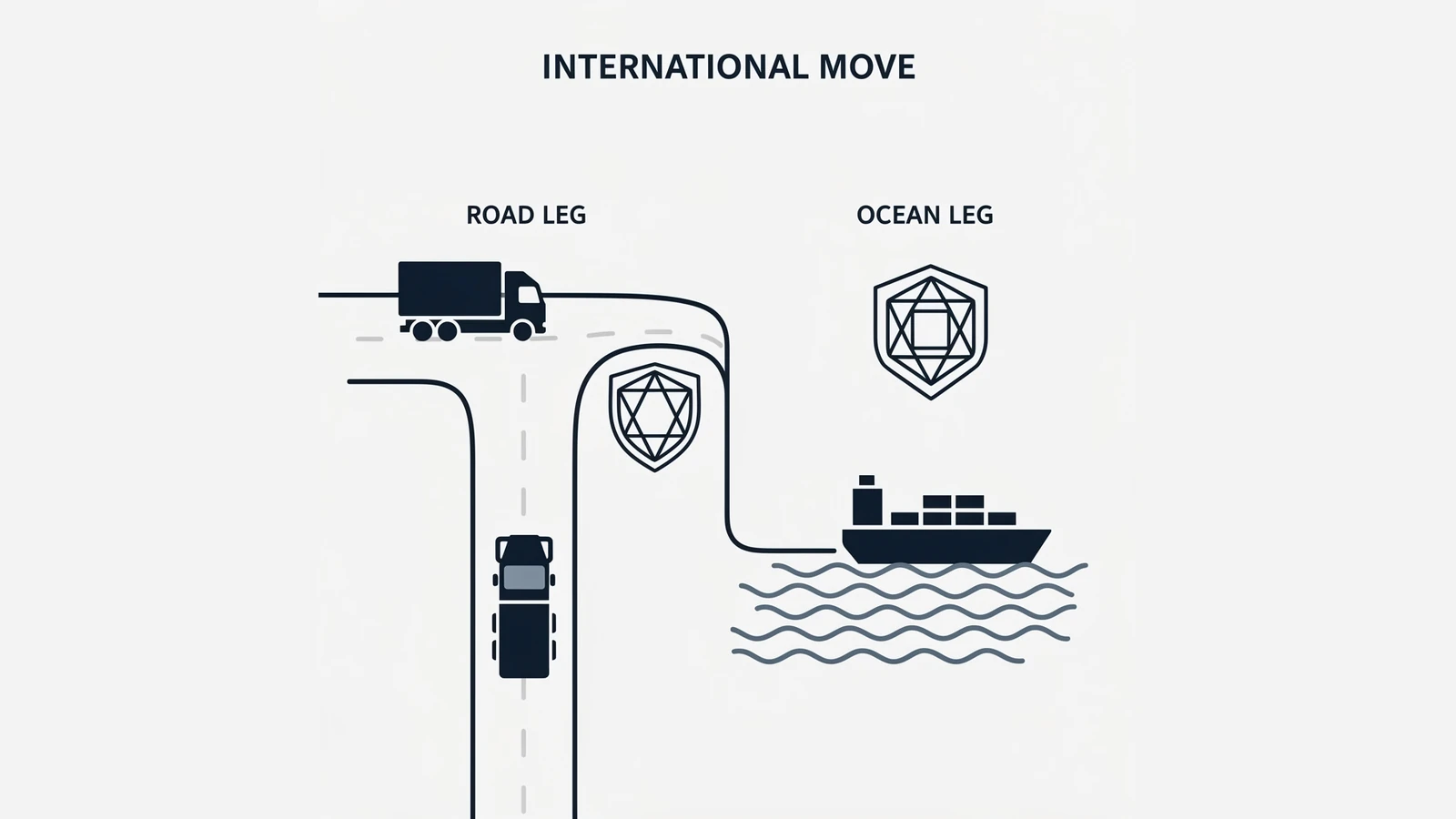
An international moving company needs two different licenses checked, because an overseas household move is two legs under two regulators. Check the ocean leg in the FMC OTI Database: the mover, or the NVOCC it books through, must hold an FMC license to arrange the ocean carriage. Check the US road leg in the FMCSA SAFER database by USDOT number, which covers the truck that collects your goods.
Moving companies advertise the USDOT number far more often than the FMC license, and what the mover rankings are built on shows how rarely either credential reaches a ranking: 0 of 27 pages there check a company against the registry. In SeaRates' own count of 245 pages ranking in US search on 07/26/2026, 21 pages showed only USDOT or MC authority with no mention of the Federal Maritime Commission, against two that showed an FMC number.
Three checks take about five minutes:
- Match the legal entity. The name on the USDOT record, the FMC record and the estimate should be the same company, not three related names.
- Check the ocean leg specifically. A mover with a valid USDOT number and no FMC license is not authorized to arrange your ocean carriage itself, and is booking through someone who is.
- Ask which party issues the bill of lading. The answer identifies who carries the liability, and it should match an NVOCC record in the registry.
A move needs two searches that start from the same two identifiers and run in two different registers: the USDOT number in FMCSA’s registered mover search for the road leg, and the company name in the FMC register for whoever arranges the ocean carriage. They are frequently different entities — United Van Lines International holds FMC licence 002308 for the ocean leg, while the van line brand most people search for does not appear in that register at all.
The FMCSA search also settles a distinction that decides who answers for your goods, and the regulator draws it explicitly: a mover owns trucks, employs crews, assumes full responsibility for the transport and estimates from its own tariff; a broker owns nothing, is not authorised to transport, and must base its estimate on the tariff of the mover it hires. Both must be registered with FMCSA, and a broker may only use movers that are. Of the 27 mover ranking pages SeaRates measured, one links to either register.
Freight forwarder or NVOCC: who takes on carrier liability
Carrier liability is the practical difference between the two OTI categories, and it decides who you claim against. The distinction is largely absent from the pages that rank: of 245 measured by SeaRates on 07/26/2026, 10.2 % explain the difference between a freight forwarder and an NVOCC, while 17.6 % mention a bill of lading without saying whose name is on it. An Ocean Freight Forwarder acts as your agent: it arranges the booking and the paperwork, and the contract of carriage runs between you and the ocean carrier. An NVOCC steps into the contract itself — it issues its own bill of lading, publishes its own tariff, and is the carrier as far as you are concerned.
| Ocean Freight Forwarder | NVOCC | |
|---|---|---|
| Role toward you | Agent | Carrier |
| Issues own bill of lading | No | Yes |
| Publishes own tariff | No | Yes |
| Assumes carrier liability | No | Yes |
| FMC bond (US-based) | $50,000 | $75,000 |
Read the bond level on an FMC license as a category signal. A company holding only a $50,000 forwarder bond is not an NVOCC and cannot issue its own bill of lading, whatever the sales conversation suggested. What the published lists measure instead of liability is set out under how ocean freight forwarders compare on our scorecard: of 62 pages ranking for those queries, 3 publish a method and 1 discloses how it is paid. When a quote promises a house bill of lading, the bond on the record should be the NVOCC figure.
Bond amounts and what a bond actually covers
An NVOCC bond is the proof of financial responsibility the Federal Maritime Commission requires before it will license or register an NVOCC, and the amount depends on where the company is based: $75,000 for a licensed US-based NVOCC and $150,000 for an unlicensed foreign-based NVOCC. The Federal Maritime Commission sets OTI bond amounts by category, and the amounts are public:
| Entity | Bond |
|---|---|
| Ocean Freight Forwarder | $50,000 |
| US-based NVOCC | $75,000 |
| Unlicensed (registered) foreign-based NVOCC | $150,000 |
| Optional US–China trade rider | +$150,000 combined coverage |
Bonds are filed on Form FMC-48 for an individual OTI or Form FMC-69 for a group, and the surety must be approved by the US Treasury and listed on Department Circular 570.
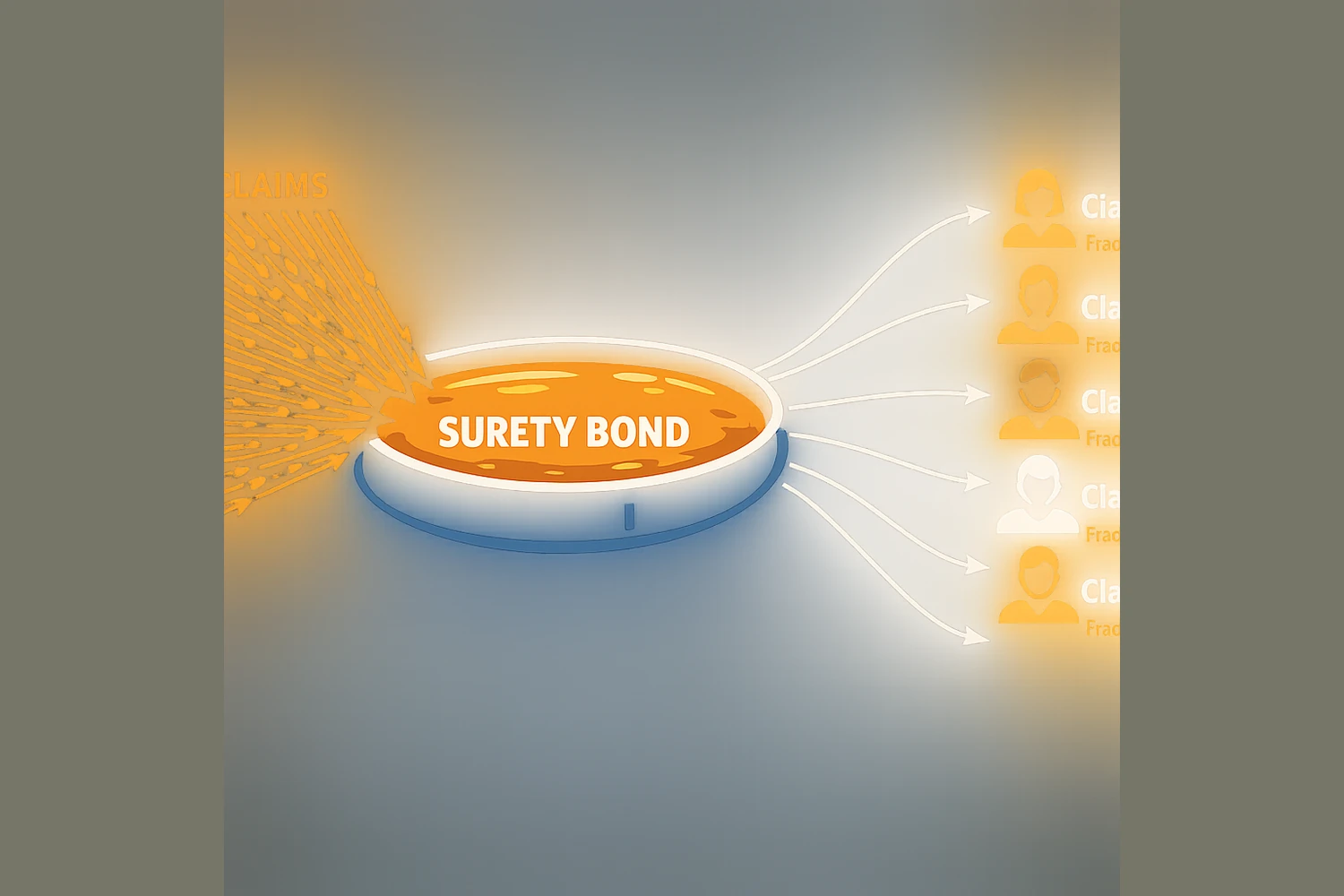
An FMC bond is not cargo insurance, and the distinction matters more than the number — yet it is the single least-explained fact in this market. Of 245 pages ranking in US search that SeaRates measured on 07/26/2026, 29 name a bond amount and exactly one explains that the bond is a shared pool rather than per-shipment cover. The bond is a single pool covering all claimants against that operator, not a per-shipment guarantee. If an NVOCC collapses owing money to sixty customers, those sixty claims share one $75,000 pool, and each claimant recovers cents on the dollar. Cargo insurance, a claim against the ocean carrier under its bill of lading, and a bond claim are three different routes with three different limits.
Treat an FMC bond as a screening signal and a last resort. What it tells you reliably is that the company met a financial-responsibility requirement at the time of filing; what it does not tell you is whether there will be anything left in the pool when your claim arrives. The charge that most often turns into a claim is not the freight itself but the clock at the terminal — free time by US port and what happens after it sets out how it runs.
A US-based NVOCC and a foreign-based NVOCC are not the same protection
Foreign-based NVOCCs may operate in US trades without an FMC license by registering instead, and the Federal Maritime Commission lists them alongside licensed NVOCCs in the same file. Registered foreign-based NVOCCs carry no license number, and their bond requirement is higher — $150,000 against $75,000 for a licensed US-based NVOCC.
NVOCC bond amounts are hard to find before you need them: of 245 pages ranking in US search that SeaRates measured on 07/26/2026, 11.8 % name any bond amount at all. The higher bond reflects the harder recovery, not a stronger guarantee. Pursuing a claim against an entity with no US authority and no US Qualifying Individual is a different exercise from pursuing a licensed US company, and the difference shows up in time and legal cost rather than in the headline figure.
Check whether the NVOCC you are booking is licensed or registered before you accept the rate, not after a claim. The absence of a license number on the registry row is the tell.
The FMC publishes an export of the same list, and it makes the scale checkable rather than rhetorical. SeaRates downloaded the official OTI List on 07/28/2026 — 9,795 records, one per organisation, carrying the bond columns the web search does not display — and counted the licence field. 4,590 records of the 9,795 carry no licence number at all, or 46.9%. The tell described above therefore applies to nearly half the register rather than to an edge case.
The bond column says the same thing a second way, and it is the easier one to read:
| Group | Bond | Records | What the row looks like |
|---|---|---|---|
| Registered foreign-based NVOCC | $150,000 | 4,582 | No licence number, address outside the United States |
| Licensed US-based NVOCC | $75,000 | 4,454 | Licence number present, US address |
| Ocean freight forwarder | $50,000 | 3,249 | 3,249 of the 3,255 forwarder bonds are exactly this figure |
A bond figure quoted to you is therefore a category marker as much as an amount: $150,000 means registered rather than licensed, and it says so before you look anything else up. Counted by SeaRates from the FMC OTI List export of 07/28/2026; the register drifts by a few records a day, so the date belongs beside the count.
A customs broker license is a different license from a different agency
A customs broker is licensed by US Customs and Border Protection, not by the Federal Maritime Commission, and the two examinations are unrelated. To find or check one, search CBP's Permitted Brokers List, which is published by port and lets you confirm that a broker holds a permit for the district where your entry will be filed — a national credential and a district permit are not the same thing. Customs brokerage is the authority to file entries with CBP on an importer's behalf; ocean intermediation is the authority to arrange the carriage. A company may hold either, both, or neither.
Eligibility for the broker exam is narrower than most shippers assume, and it deliberately excludes nothing about logistics experience: a candidate must be a US citizen or lawful permanent resident, at least 18 on exam day, and free of disqualifying felony convictions unless civil rights have been restored in writing. There is no education, degree, experience or sponsorship requirement.
Continuing education is now part of the customs broker credential. CBP finalized a continuing-education requirement for individually licensed customs brokers in a Federal Register rule dated 01/11/2024. The credit count per triennial period is set by CBP, and we do not publish a figure here because the CBP page detailing it was not retrievable at the time of writing — ask any broker to show their current compliance record rather than accepting a number from a comparison site.
Importer Security Filing sits alongside customs brokerage and outside the FMC framework entirely, and it is mentioned far less often than brokerage itself: of 245 pages ranking in US search that SeaRates measured on 07/26/2026, 54 mention customs brokers and 11 mention ISF. ISF-10 has applied to cargo arriving in the United States by vessel since 01/26/2009, and CBP warns of monetary penalties, increased inspections and cargo delay for non-compliance.
Accreditations that are not licenses: FIDI FAIM, IAM, WCA, CTPAT
Trade association membership and government certification are frequently displayed side by side with the OTI record, and they answer different questions. Badges travel further than the records behind them: across 245 pages ranking in US search that SeaRates measured on 07/26/2026, IAM or WCA appear on 20, FIDI on 13, CTPAT on 6 — and the SVI number that makes a CTPAT claim checkable on two.
- FIDI FAIM is an audited quality standard for international movers and not an OTI credential, assessed against a published set of qualifying criteria that a member has to maintain between audits rather than meet once. Verify a claim on FIDI's own member directory, and check the audit cycle date rather than the logo.
- An SVI number — Status Verification Interface number — is the unique identifier assigned to a certified CTPAT member, and it is how one CTPAT partner verifies another's status with US Customs and Border Protection. A company claiming CTPAT membership without producing an SVI number has produced nothing checkable.
- IAM membership for a moving company means membership of an international trade association of movers and forwarders: it signals that the company operates in the industry's referral network and accepts its arbitration and code of conduct. IAM membership is not a federal credential and confers no authority to arrange ocean carriage.
- WCA network membership means a freight forwarder belongs to a global network of independent forwarders that route cargo to each other, usually with a financial protection scheme covering payment between members. WCA membership describes who a forwarder can hand your cargo to abroad, not whether it is authorised at home.
| Badge | What it confirms | What it does not confirm |
|---|---|---|
| FIDI FAIM | Passing a recurring quality audit | Authority to arrange ocean carriage |
| IAM / WCA | Network membership, dues paid | Any regulator's approval |
| CTPAT (SVI number) | Participation in a CBP security program | Financial responsibility or federal authority |
| FMC OTI license | Authority to act as forwarder or NVOCC | Service quality or solvency |
Verify an accreditation badge at its own source, the way you would verify an FMC record. FIDI publishes its member list, and CBP confirms CTPAT status through the SVI number a partner supplies. A logo copied into a footer is not verification, and a lapsed membership looks identical to a current one until it is checked.
What goes wrong: cloned sites, fresh registrations, hijacked invoices
Shipping fraud rarely looks like fraud at the point of contact, and an FMC license check is the cheapest filter against it. The warning is also the rarest thing on the pages that rank: of 245 measured by SeaRates on 07/26/2026, 0.8 % tell a reader to confirm a change of bank details before paying. Three patterns account for most of the damage, and each has a cheap check:
- The cloned site. A fake ocean freight forwarder website is a portal built to impersonate a real logistics company: the text, the logo, the credential claims and often the staff photos are copied from a genuine forwarder onto a new domain, with one field changed — the bank details. Check the license number against the FMC OTI Database and confirm that the company name on the registry row matches the entity on the invoice, not just the name in the header.
- Fresh registration behind a long claim. A company that claims 20 years in business but holds a brand-new registration has usually operated before under a different entity — after a rebrand, a restructuring, or the closure of a predecessor carrying complaints or judgments. The claim is not automatically false, but it is unverifiable until the earlier entity is named. State incorporation records are public; compare the incorporation date against the claim before the first payment, and ask directly which entity the experience belongs to.
- The hijacked invoice. A genuine booking, a real forwarder, and a payment instruction that arrives late in the thread from a lookalike address, usually with new banking details and urgency. Confirm any change of payment details by phone on a number you already had, not on one supplied in the message.
Every check on this page is free, and the slowest of them is the one nobody runs:
| Check | Where it runs | Time | Fee |
|---|---|---|---|
| Ocean authority | FMC OTI database | about 2 minutes | $0 |
| US road leg | FMCSA SAFER | about 2 minutes | $0 |
| Legal entity | state business registry | about 3 minutes | $0 |
| Customs broker permit | CBP Permitted Brokers List | about 2 minutes | $0 |
| CTPAT status | SVI number through the CBP portal | ask the company | $0 |
None of these OTI, FMCSA and identity checks needs a lawyer, and all three take minutes. What they have in common is that they compare a claim on a page against a record the claimant does not control. When the cargo is already held and the checks come too late, the order of actions is set by whoever is billing: a charge from the terminal or the carrier goes through the demurrage dispute route and its deadlines, and a complaint against a licensed intermediary goes to the Federal Maritime Commission itself.
For the forwarder case specifically, with the corpus numbers behind it, how to tell whether a freight forwarder is legit sets the same check against the 245 pages that were measured and the two that show a licence number.
Frequently asked questions
The Federal Maritime Commission's OTI search at www2.fmc.gov/oti is public and requires no account. Foreign-based NVOCCs may operate through registration instead, with a $150,000 bond rather than $75,000. It covers claims against that operator from all claimants, up to $75,000 for a licensed US-based NVOCC.
Does an FMC license mean a company is reliable?
No. It confirms authority, a designated Qualifying Individual and a filed bond. Service quality, on-time performance and claims handling are outside what the Federal Maritime Commission certifies.
Is checking an FMC license free?
Yes. The Federal Maritime Commission's OTI search at www2.fmc.gov/oti is public and requires no account.
Do I need an FMC-licensed forwarder for a US import?
A US-based company arranging ocean transportation for you must hold one. Foreign-based NVOCCs may operate through registration instead, with a $150,000 bond rather than $75,000.
What does an NVOCC bond cover?
It covers claims against that operator from all claimants, up to $75,000 for a licensed US-based NVOCC. It is a shared pool, not per-shipment cargo insurance.
How do I claim against an NVOCC bond?
Claims go to the surety named on the bond filing, which must be a Treasury-approved surety listed on Department Circular 570. The registry row identifies it.
Does a USDOT number cover international ocean shipping?
A USDOT number is issued by the Federal Motor Carrier Safety Administration and is not part of the Federal Maritime Commission's framework for ocean intermediaries. A company showing one has not shown the credential that governs the water.
How current is the FMC registry?
The Federal Maritime Commission updates OTI record status continuously and publishes status changes separately. Counts quoted from it, including the ones on this page, carry the date they were read.
What is a Qualifying Individual?
A designated officer, sole proprietor, manager or partner with at least three years of demonstrable OTI experience gained in the United States. Every OTI on the list must have one.
How do I check an international moving company's license?
Check both legs. Search the FMC OTI Database for the ocean authority and the FMCSA SAFER database for the USDOT number covering the US road leg. A mover with only a USDOT number is booking the ocean carriage through someone else.
How do I check if a shipping company is registered?
Use two federal databases for two different questions: the FMC OTI Database for authority to arrange ocean carriage, and FMCSA SAFER for motor carrier registration. State incorporation records confirm only that the legal entity exists.
How do I look up a customs broker with CBP?
A customs broker permit is checked on CBP's Permitted Brokers List, published by port. Confirm the broker holds a permit for the district where your entry will be filed, because a national credential and a district permit are not the same thing.
How do I verify a CTPAT SVI number?
Ask the company for its Status Verification Interface number and confirm it through CBP's CTPAT portal, which is separate from the OTI registry. A CTPAT claim without an SVI number cannot be checked by anyone.
What is the difference between an FMC license and an FMCSA license?
The Federal Maritime Commission authorises ocean transportation intermediaries — freight forwarders and NVOCCs. FMCSA registers motor carriers and issues USDOT and MC numbers for road transport. Only the first of the two concerns your ocean leg.
Does an NVOCC have to publish a tariff?
Yes. The Federal Maritime Commission requires a licensed NVOCC to report publication of its tariff as part of the application, alongside proof of financial responsibility. An ocean freight forwarder has no tariff of its own because it acts as your agent.
What is the risk of using an unlicensed NVOCC?
An unlicensed operator has filed no bond you can claim against and no US record identifying who is responsible. Recovery then depends on pursuing a foreign entity, which costs time and legal fees rather than a form.
How do I spot a fake freight forwarder website?
Match the number on the site against the FMC OTI Database and check that the registry name equals the name on the invoice. Treat any late change of bank details as fraud until confirmed by phone on a number you already had.
A company claims 20 years in business but has a new registration — what does that mean?
A new registration behind a long claim usually means the company operated before under a different entity, after a rebrand, a restructuring or the closure of a predecessor carrying complaints. Check whether the FMC record carries the same name.
How do I check a company's incorporation date?
State business registries publish incorporation dates free of charge, and the OTI record carries its own issue date for comparison. Compare the date against the years of experience the company advertises, and ask which entity the earlier experience belongs to.
Where do I look up a mover's USDOT number?
In the FMCSA SAFER database, which returns the carrier's registration status, fleet size and inspection history. SAFER answers nothing about the ocean leg of an international move.
What does IAM or WCA membership mean for a moving company?
Both are trade networks: IAM is an association of movers and ocean freight forwarders, WCA a network of independent forwarders that route cargo to each other. Membership is a matter of dues and sponsorship, not of regulatory approval.
How do I spot fake moving company reviews?
Fake reviews cluster: compare review dates against the entity's registration date, look for bursts of five-star ratings in a short window, and check whether reviewers describe verifiable details such as origin, destination and container size.