ExplainerOne query, three industries — which one you need
Why international shipping companies means three industries, and which one you need
International shipping companies is one phrase covering three industries that share no pricing unit, no regulator and no failure mode. What the sweep of 20 pages found:
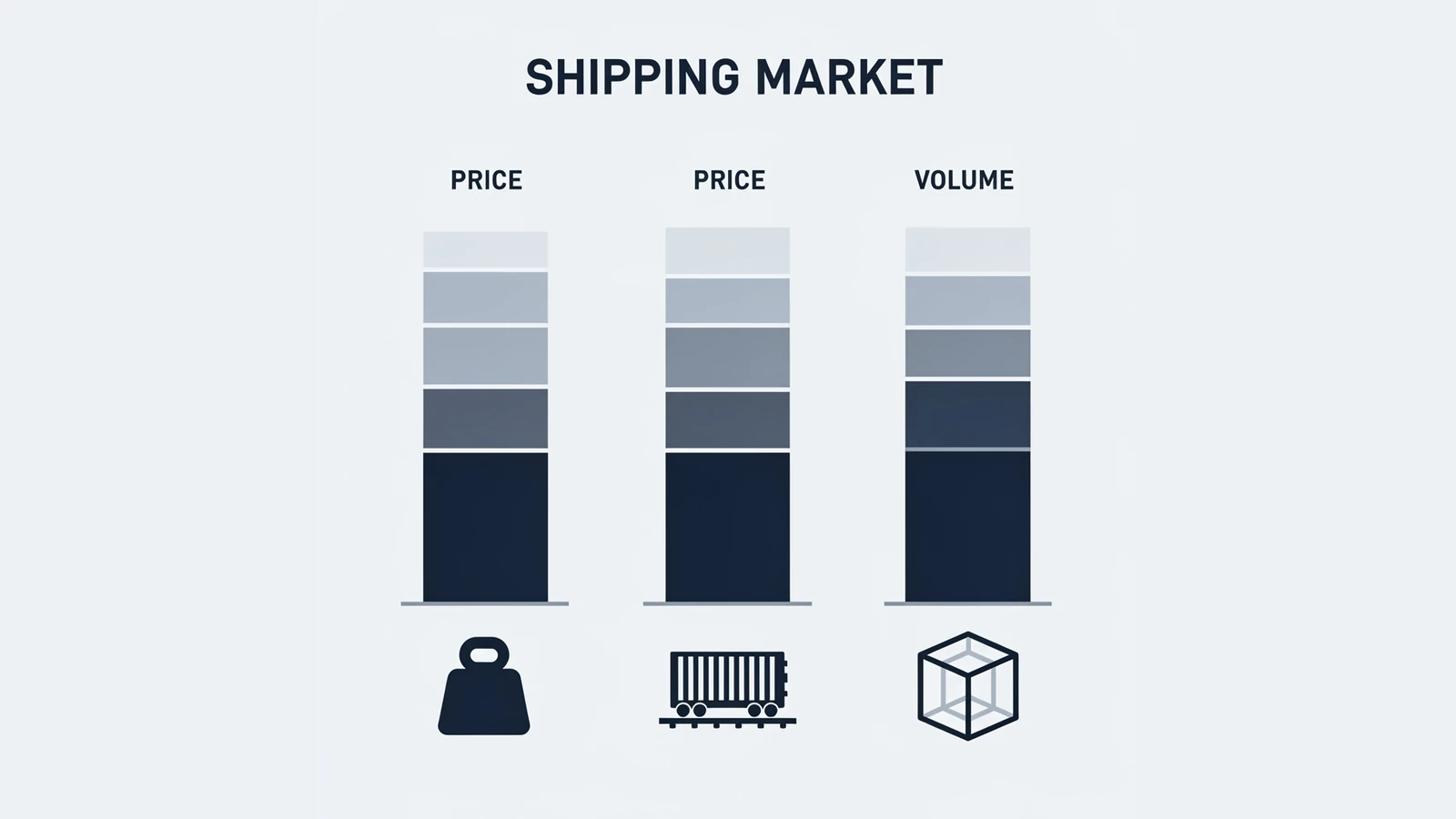
- Couriers price by the kilo, ocean carriers by the container slot, movers by the volume of household goods. A parcel up to about 30 kg is a courier shipment; a household is priced on volume; a car runs $900-5,500 depending on the method.
- Almost nobody covers more than one market. Couriers appear on 8 pages of the 20, ocean carriers on 7 pages, household movers on 2 pages, and 0 pages cover all three.
- The criteria stay unstated. 1 page of the 20 shows a score, 2 pages publish a method and not one reports a sample size.
- Prices are quoted and rarely dated. 11 pages of the 20 quote a price and 3 pages say when it was true.
- Mixing the units is the common error. 6 pages of the 20 put parcel and freight pricing in one comparison, which is how a cost per kilo ends up beside cargo sold by the cubic metre.
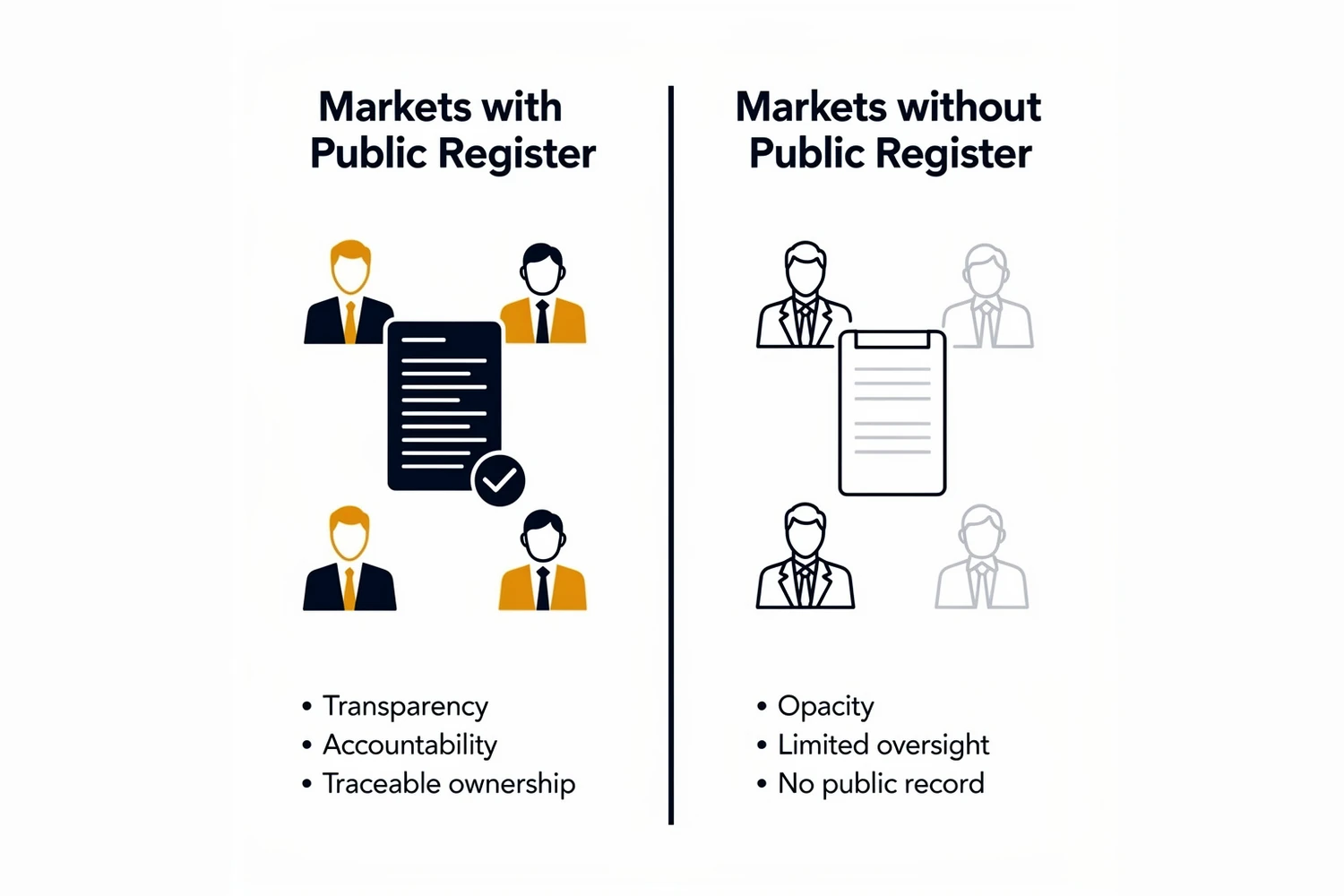
- The credential differs by market and goes unchecked. 0 pages check a company against a registry; for the ocean leg the federal list held 3,273 records for licensed forwarders and 9,030 records for NVOCCs on 07/26/2026, while for a courier no equivalent list exists because the carrier is the brand.
- SeaRates publishes no combined ranking here, because no metric spans the three markets. This page routes a shipment to the market it belongs to instead.
What international shipping companies means in this search result
Couriers, ocean carriers and household movers share the phrase and share no pricing unit, no regulator and no failure mode. Across the 20 pages SeaRates read, couriers appear on 8, ocean carriers on 7, household movers on 2, and only 2 pages mention two of the three groups together.
| Market | Who it means | Priced by | Regulated by |
|---|---|---|---|
| Courier and express | DHL Express, FedEx, UPS, USPS | Actual or volumetric weight, per kg | Postal and aviation authorities |
| Ocean container | Maersk, MSC, CMA CGM, Hapag-Lloyd | Container slot or cubic metre | Flag states; intermediaries by the FMC |
| Household relocation | John Mason, van lines, groupage movers | Volume of household goods | Road regulator plus the ocean leg's rules |
The most-named brands across 15 queries are DHL Express (8), FedEx (8), UPS (7), USPS (7), Maersk (4) and John Mason International (4). Naming frequency is not a ranking, and here it is not even a single market.
Six of 20 pages mix parcel and freight pricing in one comparison, which is how "cost per kilo" ends up next to cargo that is sold by the cubic metre. A number in the wrong unit is not a cheap quote; it is a different product.
Brands named most often across the 15 queries, sorted into the market each one actually serves:
| Brand | Named in 15 query highlights | Market it serves | Is it in the FMC register? |
|---|---|---|---|
| DHL Express | 8 | Courier and express | No — and correctly so, a courier is not an ocean intermediary |
| FedEx | 8 | Courier and express | No, for the same reason |
| UPS | 7 | Courier and express | No, for the same reason |
| USPS | 7 | Courier and express | No, for the same reason |
| Maersk | 4 | Ocean container | No — a vessel operator files tariffs rather than holding an OTI licence |
| John Mason International | 4 | Household relocation | Not found in either federal list under that name, checked 07/28/2026 |
For these shipping companies the register column is the point rather than a gap. Four of the six brands are couriers, and no absence from the ocean register says anything about them — which is exactly why a single ranking of these six would be meaningless.
One courier brand shows how far the confusion reaches. DHL Express is a courier and holds no OTI licence; DHL Global Forwarding is a separate business in the ocean market, and the federal register carries it as a registered trade name of DANZAS CORPORATION under OTI licence 000315. The same three letters therefore sit in two of the three markets on this page, under two different legal persons, with two different regulators.
Which market your shipment belongs to
Couriers, carriers and movers can only be compared inside one market, so the first decision is which market a shipment belongs to. The rule of thumb is the shipment itself rather than the destination.
| What you are sending | Market | Where it is covered on this site |
|---|---|---|
| Documents, parcels up to about 30 kg | Courier | Compare carrier rates directly; not covered here |
| Boxes or pallets, less than a container | Groupage, LCL | who consolidates less-than-container loads into the USA |
| A full container of goods | Ocean freight | how the container lines compare on capacity and schedule reliability |
| A household of furniture and effects | Relocation | how international movers compare on our scorecard |
| A car, motorcycle or motorhome | Vehicle shipping | who ships vehicles from the USA and what they charge |
Carriers in every market have their own unit, their own credential and their own way of going wrong:
| Market | Typical failure | Who answers for it |
|---|---|---|
| Courier | Lost parcel, declared-value cap | The carrier under its published tariff |
| Ocean container | Rolled booking, demurrage at the terminal | Carrier or NVOCC named on the bill of lading |
| Relocation | Volume re-priced at loading | The mover under its written estimate |
Shipping companies that sell across two of these markets do exist — several forwarders sell both LCL and full containers — but their quotes are still built in the unit of the market the cargo belongs to. Vehicles are a fourth case again, priced by method rather than by weight or volume: what sets the bill for shipping a vehicle overseas runs from $900 to $5,500 depending on which of the four methods carries it.
What the pages here actually publish
International shipping companies are ordered here without stated criteria: one page of 20 shows a score, two publish a method, and not one reports a sample size. Couriers, carriers and movers get ordered on this query by whoever wrote each list, and the criteria stay unstated on 19 of 20 pages.
| What the page does | Pages | Share |
|---|---|---|
| Names companies individually | 15 | 75.0% |
| Quotes a price | 11 | 55.0% |
| Dates that price | 3 | 15.0% |
| Cites an industry source | 5 | 25.0% |
| Discloses an affiliate or paid relationship | 4 | 20.0% |
| Shows a score | 1 | 5.0% |
| Publishes a method | 2 | 10.0% |
| Reports a sample size | 0 | 0.0% |
Disclosure at 20% is the highest SeaRates has measured in any ranking cluster, and the reason is the company this query keeps: consumer comparison sites disclose affiliate relationships more consistently than freight vendors do.
Three of 20 pages date the price they publish. In a field where courier tariffs change annually and ocean spot rates change weekly, an undated figure is a screenshot of an unknown week.

Where the credential differs by market
Carriers and intermediaries hold different credentials by market, and the one that matters depends on which market you are buying in. A courier's licence says nothing about an ocean booking, and an FMC licence says nothing about parcels.
For the ocean leg, the intermediary arranging carriage into the United States is licensed by the Federal Maritime Commission: the registry held 3,273 ocean freight forwarder records and 9,030 NVOCC records when SeaRates read it on 07/26/2026, and the second list mixes licensed operators with registered foreign ones. The check takes a minute and is set out on which credential covers the ocean leg.
Couriers aside, only 5 of the 20 pages measured cite an industry source of any kind, and none checks a company against a registry. For couriers there is no equivalent registry to check, because the carrier is the brand itself and the terms are its published tariff. For household moves, road authority covers the truck and the ocean leg runs under a bill of lading — two documents, two regimes, as moving your household goods overseas explains.
Running that check on one company takes about two minutes and is free on every market above: how to tell whether a freight forwarder is legit sets out the order the registries are searched in.
Shipping companies carry a different credential in each market, and each answers a different question:
| Market | The credential | Who issues it | What it does not cover |
|---|---|---|---|
| Courier and express | None to look up — the carrier is the brand | The carrier's own published tariff | Any ocean booking arranged by an intermediary |
| Ocean container, via an intermediary | OTI licence, forwarder or NVOCC | Federal Maritime Commission | Parcels, and the vessel operator itself |
| Ocean container, vessel operator | Tariff filing rather than a licence | Flag state and trade regulators | The intermediary you actually booked through |
| Household relocation | Road authority plus the ocean leg's bill of lading | Road regulator, then the carrier | Neither document covers the other leg |
Couriers are the market where nothing can be looked up and nothing needs to be: the tariff is published, the carrier is the counterparty, and the claim route is contractual. Every other row has a document that can be read before money moves.
Why no combined ranking exists here
International shipping companies cannot be ranked across the three markets at once, and the reason is not missing data: 0 of 20 pages here cover all three, and 2 cover even two of them. Courier performance is measured in delivery days against a service promise, ocean performance in schedule reliability against a published sailing, and relocation performance in claims and survey accuracy. No metric spans them.
Carriers from different markets therefore get no combined score on this page. Where a market has a measurable basis, the ranking for it lives on its own page, and where it does not, the page says so — that is the same standard applied on every ranking in this project.
Parcels, containers and households route to different pages, and routing is what this page does instead: name the three markets, give the unit each is priced in, and send a reader to the page where the comparison is possible. Duty and destination costs, which apply to every market that is not a courier parcel, are set out under duty and customs fees on top of the freight.
Each market measures performance against a different promise, which is why no column can be shared:
| Market | What performance means | Measured against |
|---|---|---|
| Courier and express | Delivery days | The service level sold |
| Ocean container | Schedule reliability | A published sailing |
| Household relocation | Claims and survey accuracy | A written estimate |
A single number covering all three would have to average delivery days against schedule reliability against claims — three units, three promises and no arithmetic that joins them.
What to ask each type of provider
Couriers, carriers and movers answer different questions, and the shortest path to a comparable quote is asking the right three.
| Market | Ask first | Ask second | Ask third |
|---|---|---|---|
| Courier | Is the rate on actual or volumetric weight? | What is the declared-value limit? | Which service level is quoted? |
| Ocean container | Which carrier and which sailing? | Which destination charges are excluded? | Who issues the bill of lading? |
| Groupage, LCL | What is the chargeable volume rule? | What does the destination terminal charge? | When is the origin cut-off? |
| Relocation | Was the estimate based on a survey? | Binding or non-binding? | What liability applies at sea? |
Carriers answering those questions turn a headline number into a scope. A courier rate quoted on actual weight becomes a different number under volumetric rules; an ocean quote without destination charges is half an invoice; a relocation estimate without a survey is a projection.
Answers of that kind reveal a shipping company's competence faster than a review score does — and 19 of the 20 pages SeaRates measured publish no criteria at all, so the questions are the only comparison tool a reader is given. A provider that cannot name the sailing, the chargeable volume rule or the liability regime is not necessarily dishonest, but it is selling something it does not control. For the container market those questions are already scored: what the forwarder league tables measure reads 62 ranking pages, 3 of which publish a method.
Shipping companies get searched for alongside the words scam, complaint and worst, and the field ranking them barely touches any of it. Reading the 11 pages captured in full on 07/28/2026 — a smaller set than the 20-page corpus above, and counted separately from it — gives the shape of what these lists actually discuss:
| What the page raises | Pages | Of |
|---|---|---|
| Tracking | 9 | 11 |
| Customs and duty | 8 | 11 |
| Insurance or cover | 6 | 11 |
| Complaints, disputes or claims | 2 | 11 |
| Scams or fraud | 1 | 11 |
| Checking a company against a registry | 0 | 11 |
Couriers, carriers and movers each fail differently, so there is no single place to complain either. A courier claim runs under the carrier's published tariff, because the carrier is the counterparty. An ocean claim goes to whoever issued the bill of lading, and if that party is a licensed intermediary its licence and bond are public. A relocation claim runs against a written estimate and the liability option that was signed. Establishing which of the three you are in is the first step in every case, and it is the step these rankings skip.
Sources
- SeaRates measurement of 20 pages of international shipping company rankings across 15 cluster queries, 07/26/2026. Full-text sweep, 120-word minimum.
- Brand naming frequencies from the highlights of 15 captured search results, read 07/25-26/2026.
- Cluster overlap measurements from the rankings split of 26.07.2026: Jaccard 0.04 against the forwarder cluster, 0.09 against container lines, 0.00 against moving, car and diaspora clusters.
- Federal Maritime Commission, OTI search application — 3,273 licensed ocean freight forwarder records and 9,030 NVOCC records. Read 07/26/2026.
Corrections to any figure on this page: [email protected].
Frequently asked questions
For a document or a small parcel, yes, and comparison stops being valid above roughly 30 kg. The question has three answers because the phrase covers three industries. For containers: the ocean lines ranked by capacity and reliability.
Who are the best international shipping companies?
The question has three answers because the phrase covers three industries. For parcels: DHL, FedEx, UPS and USPS. For containers: the ocean lines ranked by capacity and reliability. For households: relocation companies with an audited accreditation. Comparing across the three is meaningless.
Is DHL cheaper than sea freight?
For a document or a small parcel, yes, and comparison stops being valid above roughly 30 kg. Couriers price by weight, ocean freight by slot or cubic metre, so the same shipment produces two numbers in two units.
How do I compare carriers properly?
Pick the market first, then compare inside it on one scope: same origin and destination, same unit, same charge list, same delivery terms. Two quotes in different units are not comparable at any price.
Which providers are the most reliable?
Reliability is measured differently per market: on-time arrival for ocean carriers, transit-day performance for couriers, claims and survey accuracy for movers. Ask for the metric before accepting a claim of reliability.
Do I need a licensed company for international shipping?
For the ocean leg arranged by an intermediary, yes — it should appear in the FMC registry. For a courier, the carrier is the counterparty and its tariff is the contract. For a household move, both the road and the ocean legs have their own rules.
Why does one search result mix couriers with container lines?
Because the phrase is ambiguous and Google has not split it. Of the 20 pages ranking here, none covers all three markets, and 6 mix pricing units inside a single comparison.