GuideFree time, daily tariffs and the rule that voids an invoice
How many free days do you get, and what does day six cost in demurrage charges?
Demurrage and detention are two clocks running on one container, they belong to different parties, and the invoices arrive separately. That is the whole confusion, and it is worth settling before the money:
- Demurrage — your cargo still inside the terminal after free time. The marine terminal bills it.
- Detention — the carrier's empty or loaded box outside the terminal, in your possession. The carrier bills it, and calls it per diem.
- Free time is 3 to 7 days at most US terminals, and how the days are counted is a tariff term of its own: Maersk counts working days, Monday to Saturday, when a gate is open for pickup.
- What day one past free time costs: $250 to $390, depending on the carrier and the terminal — ZIM and Hapag-Lloyd $250, ONE $285 at Los Angeles, Maersk $300 at most US ports and $390 in the Newark and New York area, rising to $745 past day 33. In New York alone the four published tariffs run from $165 to $390.
- An invoice missing any of the 20 required elements carries no obligation to pay. It must also reach you within 30 days. Of 86 pages measured, 7 explain this.
Demurrage and detention charges: four names and one gate
Demurrage is the charge for a container that stays inside a marine terminal after free time expires, and detention is the charge for the carrier's equipment once you have taken it away. The Federal Maritime Commission treats the pair as one regulated category: 46 CFR 541.3 defines demurrage and detention as any charges, expressly including per diem charges, assessed by an ocean common carrier, a marine terminal operator or an NVOCC for the use of marine terminal space or of shipping containers, excluding freight. Four names appear on US invoices, and only the tariff definition tells you which is which:
- Demurrage — the loaded box sits inside the terminal past the last free day. Billed by the carrier, the terminal, or both.
- Detention — the carrier's equipment is out of the terminal on your time. Most US carriers bill this from the moment the container leaves the gate.
- Per diem — daily rent on the container itself once it is outside the terminal, rail ramp or container yard.
- Storage — daily rent on the ground inside a rail ramp or container yard, which is not the same ground as the marine terminal.
Demurrage terminology is not uniform across carriers, and the usual shorthand fails on at least one major line. MSC's US definitions place detention inside the marine terminal, rail facility or container yard — including time under a customs examination or cargo rework — and use per diem for the container outside the terminal. The same physical situation therefore carries different names depending on whose invoice you are reading, so match the wording on the bill against the definition in that carrier's tariff before you argue about it.
Demurrage and detention are still explained as a two-word pair by most of the market. Of 86 pages ranking in US search that SeaRates measured on 07/26/2026, 15 name all four charges and 71 stop at two or fewer. Reading the wrong definition sends the dispute to the wrong desk and wastes the 30-day window described further down this page.
How many free days a US import container actually gets
Free time on a US import runs 3 to 7 days for most containerised cargo, and no single number covers the market. SeaRates captured 52 answers from Google's AI surfaces across this cluster on 07/25–07/26/2026; the range quoted most often for a US import container is 3 to 7 days, with 2 to 5 days cited for the demurrage portion alone and 5 to 7 days for the detention portion. Free time depends on four things, and none of them is the country:
| What sets your free time | Who publishes it | Why it matters |
|---|---|---|
| The ocean carrier's tariff | The carrier | Sets free days by port, equipment type and direction |
| The marine terminal's tariff | The terminal operator | A separate document with separate free time — one container, two clocks |
| Your service contract | You and the carrier | Negotiated free days override the tariff, and only for the shipments covered |
| The equipment type | The carrier's tariff | Reefers, flat racks, open tops and tanks usually get less than a general dry box |
Free days are also counted differently from the way most calendars work. MSC states that its detention and per diem accrue only on working days, meaning days on which the marine terminal is open and operating, while tariff tiers after free time expires are commonly billed in calendar days including weekends. Of 86 pages measured on 07/26/2026, two explain the difference between working days and calendar days at all, and three say plainly who sets free time in the first place.
Free time figures published by ports themselves cover the port's own facilities rather than every terminal in the harbour. SeaRates publishes no port-by-port table of free days here, because the primary tariffs behind those numbers were not readable at the time of writing and the figures circulating in search come from secondary summaries. Ask your carrier for the free time clause covering your bill of lading, and read it beside the terminal's tariff, not instead of it.
Last free day: where the clock stops and who publishes it
The last free day is the final date on which a container can be collected from a terminal, rail ramp or yard, or equipment returned, before daily charges begin. Free time ends at the close of that day, and the first chargeable day starts immediately after — which is why an appointment booked for the following morning already costs money. Of 86 pages that SeaRates measured on 07/26/2026, 16 use the term last free day, and it is the single most useful date on the shipment.
Last free day information sits in more than one place, and the places disagree more often than importers expect:
- The carrier's portal — shows the line's own last free day against its tariff free time.
- The terminal's website — shows the terminal's last free day against the terminal tariff, which can be a different date.
- The arrival notice — carries the container availability date, the field the FMC now requires on the invoice itself for imports.
Demurrage begins on the carrier's clock, the terminal's clock, or both, and the earlier of the two costs you first. Free time that looks generous on the carrier portal is worth checking against the terminal schedule the day the vessel discharges, because the gap between the two dates is where most unplanned charges start. The two-tariff structure behind that gap is set out in the section on two invoices below.
What one day costs: ONE's published US tariff at five terminals
Demurrage rates are published, not quoted, and Ocean Network Express publishes a complete US schedule that Google already cites in this cluster. ONE's Advisory 106, issued 12/24/2025 and effective 01/23/2026, sets import demurrage per unit per day for general dry containers, including non-operating reefers, at five US terminals. SeaRates read the advisory on 07/26/2026; the figures in parentheses in the original are the rates that applied through 01/22/2026.
| ONE terminal (import, general dry) | Tier 1 | Tier 2 | Tier 3 | Tier 4 |
|---|---|---|---|---|
| LAX Terminals, Los Angeles, CA | $285 (days 1–4) | $330 (days 5–9) | $375 (day 10+) | — |
| WUT Terminal, Tacoma, WA | $285 (days 1–4) | $330 (days 5–9) | $375 (day 10+) | — |
| Norfolk, VA | $300 (days 1–5) | $330 (days 6–9) | $375 (day 10+) | — |
| ITS Terminal, Long Beach, CA | $315 (days 1–4) | $360 (days 5–9) | $405 (day 10+) | — |
| New York (excluding Maher Terminal) | $350 (days 1–4) | $455 (days 5–9) | $540 (days 10–29) | $770 (day 30+) |
| Source: ONE Advisory 106, effective 01/23/2026 · read 07/26/2026 |
Demurrage on day six answers the question in the headline directly. Under this schedule day six costs $330 at Los Angeles, Tacoma and Norfolk, $360 at the Long Beach ITS terminal and $455 in New York outside Maher. Ten chargeable days on one general dry container works out at $3,165 at Los Angeles, $3,465 at Long Beach ITS and $4,215 in New York — a 33% spread between the cheapest and the dearest for the same carrier, the same equipment and the same tariff, calculated by SeaRates on 07/26/2026 from the schedule above.
Demurrage figures circulating in search results run well below the published tariff. Of 86 pages SeaRates measured on 07/26/2026, 18 name any per-container-per-day figure; the median of the lowest rate each of those pages quotes is $75, with a p25 of $68 and a p75 of $75. ONE's first tier at these five terminals runs $285 to $350, or 3.8 to 4.7 times that median. Two warnings belong next to every number here: a booking contract can override a published tariff for the shipments it covers, and one carrier's schedule is not the market — the comparison against Maersk, ZIM and Hapag-Lloyd, each read at source, follows below.
Why the daily figure is not a daily figure — carrier tariffs step it up in tiers, so exposure is convex rather than linear — is worked through in what demurrage actually costs per day.
One carrier's demurrage tariff is a data point; eight are a comparison, and the comparison is the part nobody publishes. Maersk, ONE, ZIM, Hapag-Lloyd, CMA CGM, COSCO, HMM and Yang Ming all publish a US import demurrage schedule, and all eight are set out below on one basis — what a given day past free time costs — because the carriers do not bucket their days the same way and a naive reading gets it wrong. Maersk, CMA CGM and COSCO count from the day of discharge, printing the free days as days 1 to 4 or 1 to 5 and starting to charge after them. ONE and ZIM number their tiers from the first chargeable day instead. Hapag-Lloyd uses no day ranges at all: it bills in fixed blocks of three days. The sixth carrier, MSC, is missing from the table for a reason set out under it.
| Carrier and port group | Free time | Day 1 | Day 5 | Day 10 | Day 30 | Tariff effective |
|---|---|---|---|---|---|---|
| Yang Ming — New York † | 4 working days | $125 | $160 | $200 | $200 | 15 May 2025 |
| ZIM — New York (Maher, PNCT, Port Liberty), Baltimore, Miami, Port Everglades † | 4 working days | $165 | $200 | $230 | $230 | 20 Apr 2025 |
| COSCO — ports it does not name separately ¶ | 5 working days | $165 | $165 | $275 | $275 | 15 Jul 2026 |
| ZIM — most other US ports | 4 working days | $250 | $300 | $340 | $340 | 20 Apr 2025 |
| Hapag-Lloyd — New York and the ports it does not name separately †¶ | 4 working days | $250 | $300 | $350 | $350 | 1 Jan 2026 |
| HMM — East Coast, excluding New York and Norfolk | 4 working days | $265 | $295 | $395 | $395 | 22 May 2026 ※ |
| CMA CGM — most US ports | 4 working days | $270 | $270 | $335 | $365 | 21 Jan 2025 |
| Yang Ming — Los Angeles | 4 working days | $270 | $270 | $340 | $400 | 1 Feb 2026 |
| ONE — Los Angeles and Tacoma | not published | $285 | $330 | $375 | $375 | 23 Jan 2026 |
| COSCO — New York, excluding Maher and Port Liberty | 4 working days | $286 | $368 | $506 | $506 | 15 Jul 2026 |
| Maersk — most US ports | 4 days | $300 | $345 | $395 | $395 | 20 Jun 2026 |
| ONE — New York, excluding Maher | not published | $350 | $455 | $540 | $770 | 23 Jan 2026 |
| ZIM — New York, APM Terminal | 4 working days | $350 | $450 | $590 | $790 | 20 Apr 2025 |
| HMM — New York and New Jersey, excluding Port Liberty and Maher | 4 working days | $355 | $475 | $710 | $1,000 | 22 May 2026 ※ |
| CMA CGM — New York and New Jersey | 4 working days | $360 | $450 | $570 | $700 | 21 Jan 2025 |
| Maersk — Newark and New York | 4 days | $390 | $500 | $640 | $745 ‡ | 20 Jun 2026 |
General dry containers and non-operating reefers, 20 and 40 foot, per container per day, days counted past free time. Two carriers price the 45-foot box higher in New York: ONE at $640 on day 10 and $870 past day 30 against $540 and $770, CMA CGM at $650 and $900 against $570 and $700. † Line demurrage only: the marine terminal invoices storage separately and directly. ‡ Maersk numbers its bands from the day of discharge, and its Newark band changes at day 34 — the 30th chargeable day, which is the column above. One day earlier, on the 29th chargeable day, the rate is still $640. ※ HMM files its US demurrage as a rule with a fixed term rather than an open end: the edition priced above ran from 22 May 2026 and expires 31 July 2026. HMM had already filed the replacement — published 29 June 2026, effective 1 August 2026, carrying no expiry date and repeating both rows above unchanged. The only rate that moves is Seattle and Tacoma, to $265, $317 and $421 from $263, $313 and $413. CMA CGM states the opposite of † explicitly: in the United States its demurrage covers storage and the line charge together — except at Baltimore, the one US port where its own tariff says the charge is line demurrage only and the terminal bills storage separately, at a flat $140 a day with no tiers at all. CMA CGM also files California apart from its all-ports rule: $275 on day 1 and $395 from day 10, against $270 and $335 in the row above, and Boston apart again at $245 rising to $410 past day 30. COSCO splits the difference by terminal — at Maher, APM and Port Liberty in New York it bills line demurrage only, at $80 to $106 a day, and there its rate falls instead of rising: $35 a day at Maher from the 14th working day after discharge, and $0 at APM and Port Liberty from the 35th, the only schedule in this set that stops charging at all. ¶ Three of the eight file per port rather than nationally, and their rows above are the rules they apply to ports they do not name. Maersk names three exceptions of its own: Miami and Port Everglades at $360 on day 1 rising to $705 past day 30, and Philadelphia at $320 to $415. Hapag-Lloyd calls that rule «all ports — except listed below»: New York, Baltimore, Miami and Philadelphia fall under it, while its named terminals are dearer — Seattle (SSA) $310 rising to $540, Long Beach (ITS) $330 to $560, Wilmington $300 to $750 — and its California default is $270 to $370. COSCO files a schedule per port rather than one national tariff, and the row above is the rule it applies to ports it does not name. Its named ports differ: Los Angeles and Long Beach cost $375 on day 10 and day 30 rather than $275; Boston costs $360 on day 10 and $490 on day 30; and at Miami, Tampa, Philadelphia, Port Everglades, Jacksonville, Oakland and Seattle-Tacoma free time is 4 working days rather than 5, which puts day 10 at $220. Read at source by SeaRates — ZIM, Hapag-Lloyd, CMA CGM and MSC on 07/28/2026, HMM, Maersk, ONE and Yang Ming on 07/29/2026.
New York demurrage carries a premium everywhere except at Hapag-Lloyd. Maersk charges $390 there against $300 at its standard ports, ZIM $350 at APM Terminal against $250 elsewhere, ONE $350 against $285 at Los Angeles. Hapag-Lloyd files New York in its cheapest group at $250, alongside Baltimore, Miami and Philadelphia. By day 10 the same dry container in the same city costs $350 on one carrier and $640 on another. ZIM alone publishes two New York rates that differ by a factor of two: $165 at Maher, PNCT and Port Liberty, $350 at APM Terminal.
Part of that spread is scope, not price. Hapag-Lloyd is the only one of the four whose US schedule states, terminal by terminal, whether the rate is line demurrage alone or line demurrage plus terminal storage. Its $250 New York rate is line demurrage only — the terminal bills storage on top of it. ZIM says the same of its $165 tariff at the split-collection terminals. Maersk and ONE do not label their US schedules this way, so the two cheapest rows above are also the two whose invoices are known to be partial. Anyone comparing a quote against this table should establish which of the two bills they are holding before concluding anything about who is dear.
Where the demurrage schedules overlap, the same terminal can be priced against two carriers directly — the comparison this page could not make while it carried one tariff.
| Terminal | ONE | Hapag-Lloyd | Gap on day 1 |
|---|---|---|---|
| New York | $350 | $250 † | ONE dearer by $100 |
| Norfolk, Virginia | $300 | $260 | ONE dearer by $40 |
| Tacoma, Washington United | $285 | $260 | ONE dearer by $25 |
| Los Angeles | $285 (LAX terminals) | $270 (Trapac) | ONE dearer by $15 |
| Long Beach, ITS | $315 | $330 ‡ | Hapag-Lloyd dearer by $15 |
Day 1 past free time, general dry. † Line demurrage only. ‡ Hapag-Lloyd bills its California terminals per working day rather than per calendar day, so a weekend costs nothing there and the two figures are not strictly comparable.
Three of the four escalate past day 30, and one does not. ZIM reaches $790, ONE $770, Maersk $745 from day 34. Hapag-Lloyd's schedule tops out at its third block and stays at $350 however long the box sits. Guides that quote a single daily rate miss this entirely, and it is where a stalled container stops being an annoyance and becomes a write-off.
Inland ramp demurrage is cheaper on every carrier that publishes a ramp tariff. Not a Maersk quirk — all four that file a separate ramp tariff price it roughly a third below their own ocean terminals, before anything is negotiated. CMA CGM and ZIM add the same warning Hapag-Lloyd does: the ramp figure is carrier demurrage only, and rail storage is invoiced by the rail operator separately. Hapag-Lloyd files one inland exception of its own — the South Carolina inland terminal at $220 rising to $360 rather than $160 to $250.
| Carrier | Free time at the ramp | First tier | Second tier | Thereafter |
|---|---|---|---|---|
| CMA CGM, merchant haulage | 3 working days | $160 (3 days) | $210 (3 days) | $260 |
| Hapag-Lloyd | day of grounding + 2 working days | $160 (3 calendar days) | $220 (4 calendar days) | $250 |
| ZIM | 2 working days | $165 (days 1–4) | $200 (days 5–8) | $230 |
| Maersk | 3 days | $190 | $250 | $280 |
MSC is absent from the table above because MSC does not publish a general US import demurrage rate at all, and that is the finding rather than a gap in the research. Its February 2026 USA tariff says each terminal bills and collects its own demurrage under its own published tariff, and names 15 terminals — among them Savannah, both Charleston terminals, LBCT, TraPac at Los Angeles and Oakland, all three Norfolk terminals, both Houston terminals and Husky at Tacoma — where MSC passes the terminal's demurrage through at cost. The single US import demurrage rate MSC publishes of its own is for Port Everglades: 4 working days free, then $65 a day for a 20-foot and $110 for a 40-foot over five days, and $120 and $220 after that.
Two consequences follow for anyone comparing carriers on demurrage. A demurrage quote from MSC is a terminal's number wearing a carrier's invoice, so it moves with the terminal rather than with the line, and asking MSC to match a competitor's demurrage rate misunderstands who sets it. And a shipper comparing total exposure has to read MSC's detention instead, which the same tariff does publish for all terminals: 4 working days free, then $185 a day for three days, $210 for three more and $250 thereafter.
Two of the eight demurrage schedules carry a warning the others do not. HMM's is a filed rule with a fixed term rather than an open end: the edition in the table was published 17 April 2026, took effect 22 May and expires 31 July 2026. HMM had filed its replacement a month before SeaRates read the rule — published 29 June 2026, effective 1 August 2026, with no expiry date and the same figures at every US port group priced above; only Seattle and Tacoma move, by $2 to $8 a day. A rule with a term is not a worse rule, but its date has to be read alongside its rate. And Yang Ming publishes no general US rate at all — its tariff is per port, and its own search tool returns superseded revisions alongside current ones. Asked for New York, it hands back a 2025 set of $125, $160 and $200 next to 2023 rows of $60 and $32 covering the same days. The figures above are the latest revision for each port, terminal and tier; a reader running the same search will see the older rows too.
HMM also holds both ends of the demurrage range. Its $130 a day at Port Liberty and Maher is line demurrage only, and its $1,000 a day past day 30 in New York is the highest figure anywhere in this comparison — against $32 a day for a container sitting in the same city on Yang Ming's superseded 2023 schedule. Neither number is wrong; they measure different things, which is the argument this page has been making since the first two carriers.
Equipment moves the demurrage number as much as geography: an operating reefer in the Newark area runs $745 on Maersk from day 3 and $1,165 from day 9, against $390 for a dry box.
One caveat belongs to the comparison itself. ZIM's schedule has been in force since April 2025, while Maersk, ONE and Hapag-Lloyd all refiled for 2026. Fifteen months is long enough for a tariff to move, which is why the effective date sits in the table next to every rate.
Two invoices for one container: terminal storage and carrier demurrage
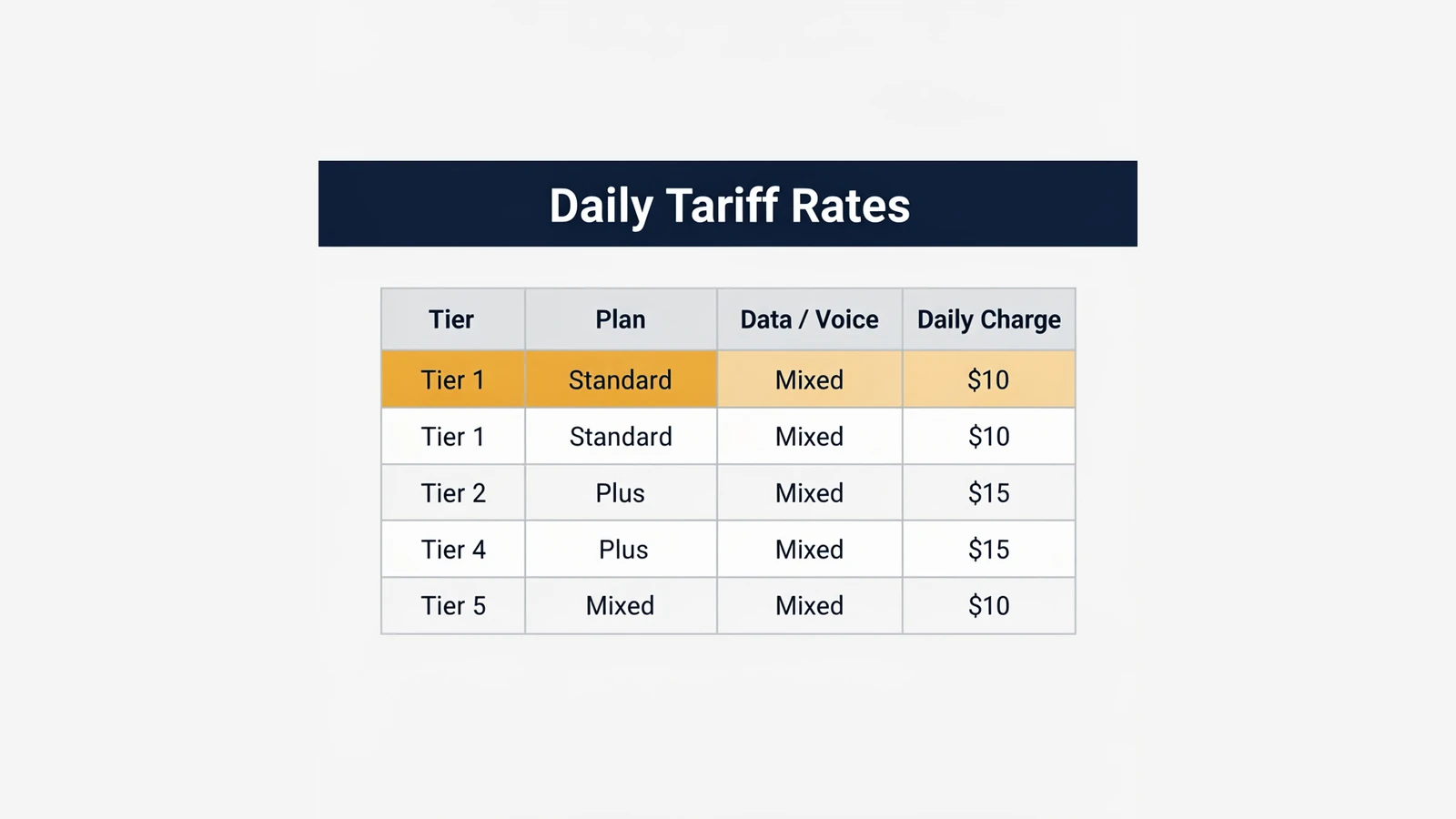
Terminal storage and carrier demurrage are separate charges under separate tariffs, and one container can attract both on the same day. OOCL moved to that structure for the Ports of New York and New Jersey: for bills of lading with a rate date on or after 05/12/2024, it charges carrier demurrage separately, while terminal storage is collected directly by the marine terminals under tariff OOLL-100 E-40-72. MSC describes the same split from the other side, passing terminal demurrage through at cost against the marine terminal operator's published tariff.
Terminal storage tariffs multiply the problem rather than resolving it. At the Port of New York and New Jersey three terminal tariffs run at once, as the Port Authority confirmed on the tariff page SeaRates read on 07/26/2026:
- Port Authority Marine Terminals Tariff FMC Schedule No. PA 10 — covers the Authority's own public berths; the current edition took effect 05/01/2026.
- Maher Terminal's own tariff — published separately by the operator.
- A common tariff for the other five operators — APM, GCT Bayonne, GCT New York, Port Newark Container Terminal and Red Hook, effective 10/01/2025.
Demurrage at Los Angeles is organised the same way: Port of Los Angeles Tariff No. 4, effective 03/01/2026, puts free time, wharf demurrage and storage in its Section 7, alongside the carrier and terminal schedules that apply to the box itself. Of 86 pages ranking in US search that SeaRates measured on 07/26/2026, seven explain that terminal storage is billed separately from the carrier's line demurrage, and two name a tariff schedule number of any kind. Ask which tariff each line on your invoice comes from before you pay any of it, and read it beside every other charge the delivered container bills, where the terminal lines sit next to the federal fees.
What the FMC requires on a demurrage invoice: 20 elements in five groups
Demurrage invoices issued in US trades have had a mandatory content list since 05/28/2024. The Federal Maritime Commission issued its final rule on 02/23/2024, published it at 89 FR 14362 on 02/26/2024, and the rule took full effect on 05/28/2024 once the Office of Management and Budget cleared the invoice-contents section under the Paperwork Reduction Act. Counting the items in 46 CFR 541.6 gives 20 required elements in five groups — 4 identifying, 8 timing, 3 rate, 3 dispute and 2 certification.
| Group (46 CFR 541.6) | Required on the invoice |
|---|---|
| Identifying (4) | Bill of lading number(s); container number(s); port of discharge for imports; the basis for why you are the proper party liable |
| Timing (8) | Invoice date; invoice due date; allowed free time in days; start date of free time; end date of free time; container availability date (imports); earliest return date (exports); the specific dates charged |
| Rate (3) | Total amount due; the applicable tariff rule, terminal schedule or contract section the daily rate rests on; the rate itself |
| Dispute (3) | Contact for questions or a mitigation request; a digital route (URL, QR code) to the documented process; the timeframes for requesting and resolving |
| Certification (2) | A statement that the charges comply with FMC rules including 46 CFR 545.5; a statement that the billing party's own performance did not cause the charges |
| Counted by SeaRates from 46 CFR 541.6, eCFR text read 07/26/2026 |
Demurrage billing rules have edges worth knowing before you rely on them. 46 CFR 541.2 applies the rule to invoices from an ocean common carrier, a marine terminal operator or an NVOCC, and expressly does not govern billing between carriers and terminals — a bill from a trucking company or a warehouse falls outside it. Per diem sits inside the rule, because 541.3 folds per diem charges into the definition. Of 86 pages measured on 07/26/2026, five cite 46 CFR Part 541 and 12 name the 05/28/2024 effective date.
Four checks that can make a demurrage invoice unenforceable
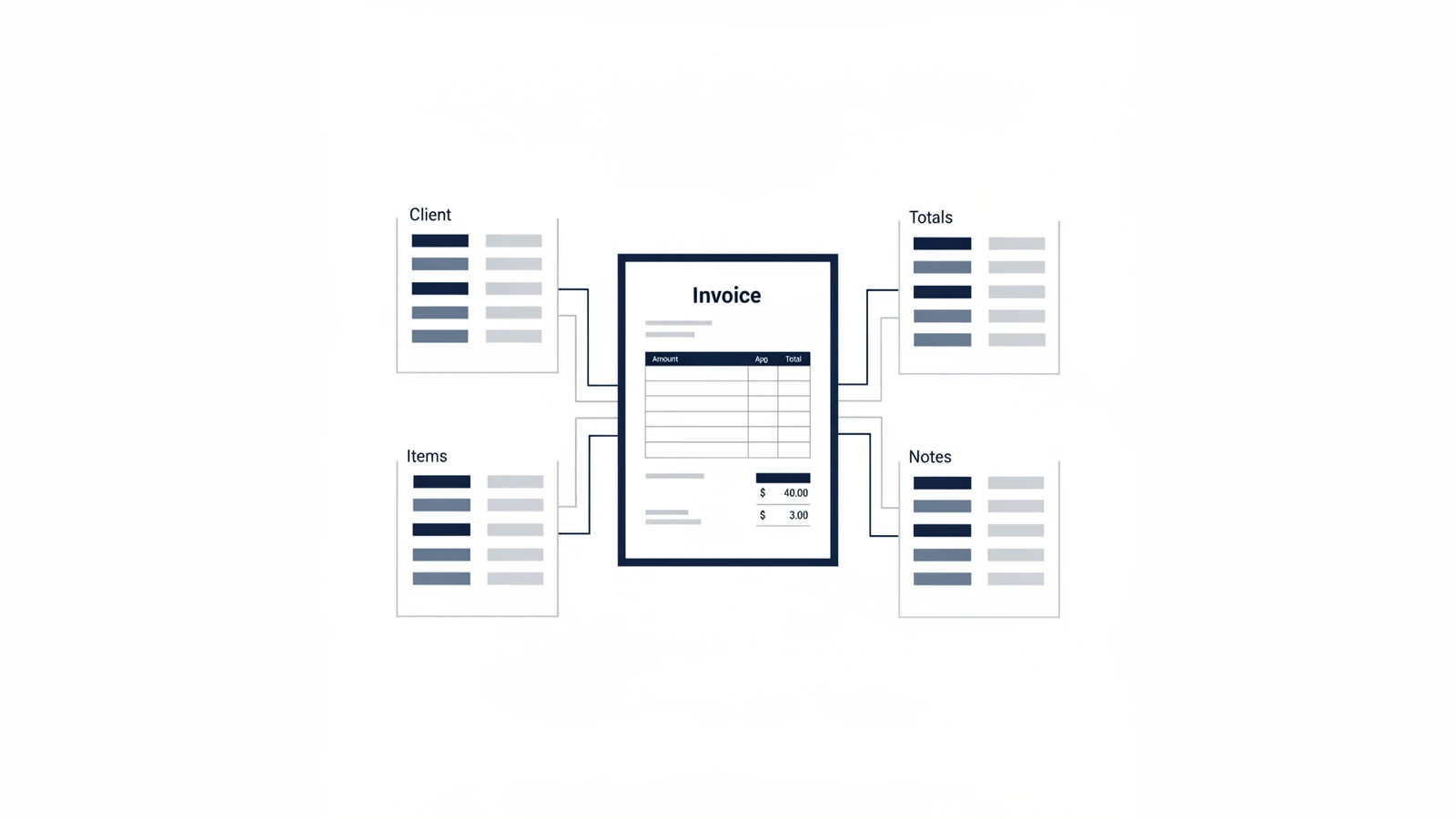
Demurrage invoices that break the billing rule stop being payable, and the rule says so in one sentence: under 46 CFR 541.5, failure to include any of the required minimum information eliminates any obligation of the billed party to pay the charge. Four checks take a few minutes each and rest on the regulation rather than on negotiation:
- Count the demurrage elements. Compare the invoice against the 20 items in 46 CFR 541.6. A missing free time start date or a missing rate basis is not a formatting slip; it is the condition the regulation attaches the consequence to.
- Check the demurrage issue date. 46 CFR 541.7 gives the billing party 30 calendar days from the date the charge was last incurred. An NVOCC has 30 calendar days from the issue date of the invoice it received. Past that, the billed party is not required to pay.
- Check who the demurrage is billed to. Invoices may go only to the party that contracted for the transportation or storage, or to the consignee — the ultimate recipient of the cargo — and not to both at once. A third party may pay on your behalf without becoming liable.
- Check the demurrage certifications. The invoice must carry the billing party's statement that the charges comply with FMC rules and that its own performance did not cause them. A carrier that caused the delay is certifying against itself.
Demurrage disputes work better as a documented process than as a refusal. Withholding payment without filing anything leaves the container where it is and the argument unrecorded, so use the mitigation route below and state the invoice defect in writing as your reason. Of 86 pages SeaRates measured on 07/26/2026, seven explain that a non-compliant invoice removes the obligation to pay — the strongest protection in this market is also its least published fact.
How to dispute a demurrage invoice: deadlines, evidence, and where it goes
Demurrage disputes run on a 30/30/30 structure written into the regulation. 46 CFR 541.8 requires the billing party to allow the billed party at least 30 calendar days from the invoice issue date to request mitigation, refund or waiver, and requires the billing party to attempt to resolve that request within 30 calendar days of receiving it, unless both sides agree a longer period. Combined with the 30-day issuance limit in 541.7, the three windows are the spine of every carrier dispute portal in US trades.
Demurrage claims are decided on documents, and the strongest evidence shows the delay was outside your control. MSC's published dispute requirements are unusually specific:
- No appointment available — a time-stamped screenshot for each day of the free time period and up to pickup, showing no slots on any shift as far forward as the terminal system allows.
- Government hold — a statement that the customs hold did not result from any action by the shipper, its agent or any party to the bill of lading.
- Contract terms — the service contract number and documentation for the clause you rely on.
- Identifiers every time — bill of lading number, container numbers, invoice number and a written explanation.
Demurrage disputes the carrier refuses are not the end of the route. The Federal Maritime Commission offers three paths to a party holding a non-compliant invoice: a Charge Complaint, informal assistance from its Office of Consumer Affairs and Dispute Resolution Services, or a proceeding before its Administrative Law Judges. Of 86 pages SeaRates measured on 07/26/2026, four name any of those routes. File the day the invoice arrives, not the day before the window closes: winning evidence is dated and gets harder to reconstruct. Both routes assume the company billing you is licensed for the ocean leg at all, and run the licence check before you pay takes about two minutes against the 3,273 forwarder and 9,030 NVOCC records in the registry.
Negotiating is the second move rather than the first, and the four tests that come before it are set out in can you negotiate demurrage, or is the invoice simply wrong.
Who pays demurrage: the importer, the consignee or the forwarder
Demurrage is normally paid by the importer or consignee, and since 05/28/2024 the range of parties who can legally be billed is narrow. The FMC's final rule allows a demurrage or detention invoice to be issued only to the person who contracted with the billing party for the ocean transportation or storage, or to the consignee defined as the ultimate recipient of the cargo, and prohibits billing multiple parties simultaneously. Third parties — truckers, customs brokers, other payers — may settle the invoice, but liability stays with the shipper or consignee.
Demurrage liability shifts when the delay traces to a service failure rather than to the cargo owner:
- The importer or consignee pays the demurrage when the delay is in customs clearance, in arranging drayage, or in unloading and returning the box.
- The forwarder or NVOCC pays, in practice through a credit, when the delay is its own — a late release, a document error, a booking it failed to update.
- The carrier absorbs the charge when its own performance caused the delay, which is what the certification on the invoice is for.
Demurrage billed to the wrong party is now an enforcement matter, not a commercial argument. On 01/28/2026 the Federal Maritime Commission closed Docket No. 23-08 against MSC with civil penalties of $22.67 million, including $65,000 for billing customs agents as notify parties through its merchant clause between 2018 and 2020, and $13,145,000 at $5,000 per violation for overcharging on non-operating reefers — conduct the Commission found affected about 23% of all such bills during 2021. Of 86 pages measured on 07/26/2026, three state that one charge cannot go to two parties at once. Which intermediary stands between you and the carrier is a separate question: how ocean freight forwarders compare on our scorecard reads 62 ranking pages, 3 of which publish a method.
Chassis charges: pool day rate, per diem and the chassis split fee
Chassis charges arrive separately from container charges and follow the equipment rather than the box. A pool chassis carries a published daily market rate plus a damage waiver, and Direct ChassisLink publishes its rates by region; the schedule below took effect 07/01/2026 and was read by SeaRates on 07/26/2026.
| DCLI region (standard marine chassis) | Base rate/day | Damage waiver | Total/day |
|---|---|---|---|
| Southeast (MEM / all other) | $27.00 | $1.55 | $28.55 |
| Nashville | $28.00 | $1.55 | $29.55 |
| Midwest | $31.75 | $1.55 | $33.30 |
| Gulf (Houston / Mobile / NOLA) | $32.50 | $1.55 | $34.05 |
| Northeast (all other) | $42.50 | $2.50 | $45.00 |
| Pacific Southwest | $45.00 | $2.50 | $47.50 |
| Source: DCLI Daily Market Rates, effective 07/01/2026 · read 07/26/2026 |
Chassis per diem varies by geography more than most importers budget for. The same standard marine chassis costs 66% more per day in the Pacific Southwest than in the Southeast — $47.50 against $28.55 including the damage waiver — a spread SeaRates calculated on 07/26/2026 from the schedule above. DCLI also publishes two charges that catch people out: a $250 repositioning charge for returning a lightweight or reserve chassis to the wrong location, and a $5.00 per-incident surcharge for administering toll violations.
Chassis split fees sit outside the demurrage tariff altogether: a split is a trucking charge, not a pool charge, which is why no published tariff carries a number for it. A split happens when the container and an available chassis sit in different places, so the driver makes an extra move before the box can leave, and the drayage company bills that move. SeaRates publishes no dollar range for splits, because the circulating figures come from secondary sources rather than a schedule. Ask the drayage provider for its split fee in writing before the container discharges.
What goes wrong: the delays that generate most demurrage invoices
Demurrage bills are usually produced by five recurring failures rather than by carelessness. Each has a different owner, and the owner decides who can dispute the charge:
- Customs holds and examinations — the container is not releasable, and free time may keep running. Of 86 pages measured on 07/26/2026, 16 mention a customs exam or hold alongside these charges.
- No terminal appointment — slots sell out, and the screenshots proving it are the evidence carriers ask for.
- Empty return refused — the depot is full, so the box sits on your yard accruing per diem you did not choose.
- Chassis unavailable or split — the move cannot happen, and the demurrage clock does not pause for equipment.
- Documents released late — an original bill of lading in transit, or a telex release nobody chased.
Demurrage and detention charged during a period when the equipment physically could not move is now on weaker ground than it was. On 07/08/2026 the US Court of Appeals for the D.C. Circuit unanimously upheld the Commission's determination that detention fees levied on a trucker during a three-day port closure were unreasonable, in Evergreen Shipping Agency (America) Corp. v. FMC, 174 F.4th 169, arising from FMC Docket No. 1966(I). The Commission applied its interpretive rule at 46 CFR 545.5(c), under which these charges must work as an incentive to move freight; where return was impossible, no incentive existed. The court also confirmed that the burden of showing a fee is compensatory rests on the carrier.
Demurrage exposure across the market is measured, not guessed. The Federal Maritime Commission collects quarterly data from nine ocean carriers — CMA CGM, COSCO, Evergreen, Hapag-Lloyd, HMM, Maersk, MSC, ONE and Yang Ming — and reports that amounts billed and collected peaked in Q4 2024 at 85% above the Q2 2020 base, then fell in Q1 2025 by 24% and 19%. Of 86 pages SeaRates measured on 07/26/2026, one mentions that dataset and four the D.C. Circuit decision. When a shipment has already gone wrong on several fronts at once, work through the dispute sequence set out above before the next invoice cycle, and check the credential of whoever is billing you against the federal register. Those nine carriers are the same set ranked on capacity and on-time performance by carrier, where MSC alone holds 21.4% of world fleet capacity.
How to keep demurrage from starting, and what is actually negotiable
Demurrage avoidance is a scheduling problem solved before the vessel berths, not after the invoice arrives. Actions divide by the moment they have to happen:
- Before booking — negotiate free days into the service contract. Free time is the term carriers move on; the daily rate after it expires is tariff and rarely moves for one shipment.
- Before arrival — file the customs entry, confirm the release type, and book drayage against the expected discharge date rather than the last free day.
- On discharge — read the carrier's last free day and the terminal's last free day together, and treat the earlier one as real.
- After pickup — unload and return the empty on the first available slot; per diem runs on the box, not on your warehouse schedule.
- When the yard is full — price a pre-pull against the tariff, because the comparison is arithmetic, not judgement.
Demurrage arithmetic makes the pre-pull decision straightforward. Two days avoided in ONE's first tier is worth $570 at its Los Angeles terminals and $700 in New York, calculated by SeaRates on 07/26/2026 from the tariff effective 01/23/2026 — a pre-pull and two days of yard storage that cost less than that are cheaper than waiting, and the numbers reverse once the container escalates into tier 2.
Demurrage rates are rarely negotiable after the fact, and the honest answer to "can I negotiate?" has two parts. Free days and merged free time arrangements are contract terms settled before the booking. Mitigation, refund or waiver of a charge already incurred is a regulated process under 46 CFR 541.8 needing a documented reason, not a discount conversation. Budget the risk the way you budget freight: it belongs in the full landed cost breakdown, duty included. Where the box lands is itself a lever on the clock, and the gateway decision carries its own bill: drayage, chassis and the terminal programmes that follow it are priced separately from the free time itself.
We measured 86 pages ranking in US search: seven explain the rule that cancels the bill
By SeaRates' own count on 07/26/2026, out of 86 pages that Google United States ranks in the top ten or cites in AI Overviews across 30 demurrage and detention queries, seven explain that an invoice missing required information carries no obligation to pay. The method: full page text captured alongside the search results, 103 unique pages found, pages under 200 words and blocked pages excluded, 86 measured.
| What the page explains | Pages | Share |
|---|---|---|
| Names all four charges (demurrage, detention, per diem, storage) | 15 | 17.4% |
| Quantifies free time in days | 15 | 17.4% |
| Names a per-container-per-day rate | 18 | 20.9% |
| Names the 05/28/2024 effective date | 12 | 14.0% |
| Says a defective invoice removes the obligation to pay | 7 | 8.1% |
| Separates terminal storage from carrier demurrage | 7 | 8.1% |
| Cites 46 CFR Part 541 | 5 | 5.8% |
| Names an FMC recourse route | 4 | 4.7% |
| States who sets free time | 3 | 3.5% |
| States one charge cannot be billed to two parties | 3 | 3.5% |
| Explains working days against calendar days | 2 | 2.3% |
| Measured | 86 of 103 | 07/26/2026 |
Read these demurrage shares precisely: they measure what pages explain, not what companies know or do. A forwarder that never mentions 46 CFR Part 541 may run its disputes flawlessly. What the figures show is that the parts with money attached — the rule that cancels a bill, the second tariff behind the second invoice, the gap between a working day and a calendar day — are least likely to be in front of the reader when the invoice arrives.
SeaRates publishes the demurrage tariff, its effective date and the date we read it next to every rate on this page, and corrects figures on request.
Sources
All sources below were read on 07/26/2026, except the Maersk, ZIM, Hapag-Lloyd, CMA CGM and MSC demurrage tariffs, read on 07/28/2026.
- Federal Maritime Commission — 46 CFR Part 541 (eCFR); final rule announcements of 02/23/2024 and 05/13/2024; Docket No. 23-08 (MSC penalties, 01/28/2026); Docket No. 1966(I) and the D.C. Circuit decision of 07/08/2026; quarterly detention and demurrage data from nine carriers.
- Ocean Network Express (North America) — Advisory 106 of 12/24/2025, effective 01/23/2026.
- Maersk — US Import Demurrage tariff, effective 06/20/2026.
- ZIM — USA Detention & Demurrage rate tables, effective 04/20/2025.
- Hapag-Lloyd — USA Import Port Demurrage for Merchant Haulage, effective 01/01/2026; USA Inland Demurrage Import for Merchant Haulage, effective 07/26/2025; Detention and Demurrage Tariff Guide for the United States, published 09/26/2024.
- CMA CGM — D&D Tariffs United States Import, effective 01/21/2025, expiry until further notice.
- MSC — USA Tariff, February 2026.
- COSCO SHIPPING Lines — US import Demurrage at USA tariff rule, effective 07/15/2026.
- HMM — tariff HDMU-040 rule 101-1, effective 05/22/2026, expiring 07/31/2026.
- Yang Ming — Demurrage & Detention tariff search, US import, read 07/28/2026.
- MSC — USA demurrage and detention definitions and dispute requirements.
- APM Terminals Port Elizabeth — OOCL demurrage collection advisory of 05/17/2024.
- Port Authority of New York and New Jersey — marine terminal tariffs page.
- Port of Los Angeles — Tariff No. 4, effective 03/01/2026.
- Direct ChassisLink — Daily Market Rates, effective 07/01/2026.
Corrections to any figure on this page: [email protected].
Frequently asked questions
Free time on a US import commonly runs 3 to 7 days, set by the ocean carrier's tariff and the terminal's tariff rather than by the port. Under ONE's US tariff effective 01/23/2026, the first tier for a general dry import container runs $285 to $350 per container per day at five terminals, rising to $375 to $770 in later tiers. Since 05/28/2024 an invoice may be issued only to the party that contracted for the carriage or to the consignee, and not to both at once.
How many free days do you get before demurrage starts?
Free time on a US import commonly runs 3 to 7 days, set by the ocean carrier's tariff and the terminal's tariff rather than by the port. Reefers and special equipment usually get less. A service contract can change it for the shipments it covers.
How much does demurrage cost per day?
Under ONE's US tariff effective 01/23/2026, the first tier for a general dry import container runs $285 to $350 per container per day at five terminals, rising to $375 to $770 in later tiers. Other carriers publish their own schedules.
Who usually pays demurrage charges?
The importer or consignee. Since 05/28/2024 an invoice may be issued only to the party that contracted for the carriage or to the consignee, and not to both at once. A third party may pay without becoming liable.
Can I negotiate demurrage charges?
Free days are negotiable before booking, as a contract term. A charge already incurred goes through the regulated mitigation, refund or waiver process under 46 CFR 541.8, which requires a documented reason rather than a discount request.
What makes a demurrage invoice invalid?
Under 46 CFR 541.5, omitting any of the required minimum information eliminates the obligation to pay. Issuing the invoice more than 30 calendar days after the charge was last incurred has the same effect under 46 CFR 541.7.
What is the difference between demurrage and detention?
Demurrage covers the container inside the marine terminal after free time; detention covers the carrier's equipment once it is out of your control zone. Carrier definitions vary — MSC applies detention inside the terminal and per diem outside it.
What is 14 days free detention and demurrage?
A contract term giving 14 days of combined free time across the terminal and the equipment instead of separate allowances. Combined free time is negotiated, not standard, and the wording decides whether the days run concurrently.
Why is demurrage so expensive?
Demurrage escalates by design, as an incentive to clear the terminal. Under ONE's tariff effective 01/23/2026, a New York container costs $350 on day one and $770 on day 30 — 2.2 times more for the same box.
Does free time keep running during a customs exam?
Often yes, which is why a government hold is a standard dispute ground. Carriers generally require a statement that the hold did not result from any action by the shipper or its agent.
Does the FMC demurrage billing rule cover a trucking company's invoice?
No. 46 CFR 541.2 applies to invoices from an ocean common carrier, a marine terminal operator or an NVOCC. A bill from a motor carrier or a warehouse falls outside the rule.
What is a chassis split fee, and is it demurrage?
A drayage charge for the extra move a driver makes when the container and an available chassis are in different places. The trucking company bills it, not the chassis pool or the carrier, and no published tariff sets a single amount.
Can a carrier charge detention during a port closure?
Not automatically. On 07/08/2026 the D.C. Circuit upheld the FMC's finding that detention charged during a three-day port closure was unreasonable, because a charge that cannot change behaviour is not serving its incentive purpose.