Ranking7 companies ranked by how often 22 measured queries name them
What international mover rankings measure, who the lists name, and which credentials you can verify
International moving companies rankings are led by five American van lines, and the credential that covers the ocean leg is the one those lists leave out. What the sweep of 27 pages found:
- Five US van lines carry the list, and every one of them built its name on domestic moves. Allied Van Lines is named in 14 of the 22 measured queries, North American Van Lines in 13, American Van Lines in 11, International Van Lines in 10 and United Van Lines in 5.
- The lists rank on retail review platforms. 15 pages of the 27 rank on platform reviews, and one of those fifteen says how it weighs them.
- The credential covering the ocean crossing is the least named. 9 pages name FIDI or FAIM, 11 pages name USDOT or MC road authority, and 5 pages name the FMC licence that actually covers the ocean leg.
- Prices are dated more often than in the car cluster, and still rarely. 14 pages of the 27 name a dollar figure, 4 pages say when it was true, and 0 pages use the word median.
- The estimate decides the money and is almost never explained. 1 page of 27 says what happens when the loaded volume exceeds the survey, and under a non-binding estimate a mover may demand up to 110% of it at delivery.
- Where deals actually break is barely covered. 12 pages of the 27 discuss deposits, 3 pages mention held shipments, and 4 pages publish any complaint data at all.
- SeaRates publishes no score for any moving company here, because a score needs a rate series and a complaint record with a denominator, and neither exists yet.
International movers ranked by how often the market names them
Five American van lines carry the list, and every one of them built its name on domestic moves. Allied Van Lines appears in 14 of the 22 queries SeaRates measured, North American Van Lines in 13, American Van Lines in 11, International Van Lines in 10 and United Van Lines in 5.
| # | Company | Named in | What the company is | What is verifiable about it |
|---|---|---|---|---|
| 1 | Allied Van Lines | 14 of 22 queries | US van line with an international division | FMCSA authority, agent network |
| 2 | North American Van Lines | 13 of 22 queries | US van line | Road authority, agent network |
| 3 | American Van Lines | 11 of 22 queries | US van line | Road authority |
| 4 | International Van Lines | 10 of 22 queries | Mover and broker | FMCSA authority, FMC status of its ocean partner |
| 5 | United Van Lines | 5 of 22 queries | US van line | Road authority, and an FMC licence held by its international entity — checked below |
| — | Schumacher Cargo Logistics | AI answers only | Forwarder / NVOCC | FMC licence status |
| — | Seven Seas Worldwide | AI answers only | Groupage specialist | Ocean partner and licence |
The international movers table above ranks visibility, not service. It counts how many of the 22 measured queries named each company on 07/25-26/2026 and nothing more. A van line sits high because it has decades of domestic advertising behind it, which is a different property from being the right company for one household crossing an ocean. Two names carry no position because they surfaced only in AI answers rather than in the ranked lists — a distinction worth keeping, since the two surfaces are assembled differently.
Nineteen of 27 pages name movers individually, and the composition is the finding. A household searching for an international move meets a shortlist assembled from the domestic market, where the same brands compete on truck fleets rather than on ocean bookings.
What those lists are built on
International moving companies rankings in this result set are built on BBB profiles, Trustpilot scores, Yelp entries and Google stars: fifteen of 27 pages rank on platform reviews, and one of the fifteen says how it weighs them.
| Basis | What it answers | What it does not answer |
|---|---|---|
| Platform review average | How the crew packed and communicated | Whether the container cleared customs on time |
| Number of reviews | How much retail traffic the company handles | Anything about international volume |
| Editorial score | The editor's judgement, if the method is published | Whether the score is reproducible |
| Accreditation | Whether a third party audited the process | Price, transit time or the ocean partner |
Three mover pages of 27 show a score, two publish a method, and one does both. Four report a sample size — better than the car shipping cluster, where two did — and none of the four counted shipments rather than companies.
A review average measures how the crew packed and communicated, not whether the container cleared customs on time. Movers are rated on the part of the job the customer watches, which is the domestic pickup, and the ocean leg happens where nobody is looking.
Which credentials a third party actually audits
FIDI and FAIM appear on 9 of 27 pages, and the FMC licence that covers the ocean leg on 5. Moving companies advertise a wall of logos, and only some of those logos represent an audit somebody else performed.
| Credential | Issued by | Audited by | What it confirms |
|---|---|---|---|
| FAIM | FIDI Global Alliance | Independent auditor on a cycle | Process, finances, insurance of the mover |
| FMC OTI | Federal Maritime Commission | Federal registry | Right to arrange the ocean leg, surety in place |
| Road authority | FMCSA | Federal registry | The US road leg only |
| BBB rating | Better Business Bureau | Complaint handling, paid accreditation optional | How complaints were answered |
Accreditation of that kind audits the process and finances of a moving company, and it says nothing about price or transit time. An FMC OTI licence covers arranging the ocean leg, while USDOT and MC authority cover the truck inside the USA — and 11 pages name the second against 5 naming the first.
The FMC registry held 3,273 licensed ocean freight forwarder records and 9,030 NVOCC records when SeaRates read it on 07/26/2026, and the NVOCC list mixes licensed operators with registered foreign ones. The full procedure is set out under look the company up in the federal registry before you pay.
What a move on those credentials actually costs, in the volume unit the ocean leg is priced in, is set out in the average cost of an international move.
International movers named in the ordering above, run through the FMC register on 07/28/2026:
| Company, as the list names it | Named in | What the FMC register actually shows |
|---|---|---|
| United Van Lines | 5 of 22 queries | An entity named UNITED VAN LINES INTERNATIONAL, INC. holds OTI licence 002308 as an ocean freight forwarder, with a $50,000 bond in force with St. Paul Fire and Marine since 21.04.2002 and renewal due 31.08.2028 |
| Schumacher Cargo Logistics | AI answers only | Licensed NVOCC, OTI licence 020417, $75,000 bond with Merchants National Bonding since 22.09.2025, renewal due 31.07.2029 |
| Allied, North American, American and International Van Lines | 14, 13, 11 and 10 of 22 | None of the four appears in either federal list, checked 07/28/2026. The register holds 8 ocean freight forwarders and 10 NVOCCs whose name contains "van lines", and none of them is these four |
| Seven Seas Worldwide | AI answers only | Not found under that name. The register holds four unrelated Seven Seas companies — Consultants, Maritime USA, Shipping USA and Trading |
Two things follow for international movers from the two rows that are filled in. The bond behind an ocean licence is a published number rather than a claim — $50,000 for a forwarder, $75,000 for an NVOCC — and it is a shared pool across all claimants, not insurance on one household's goods. And the licensed entity is not always the brand on the advertising: the register lists United Van Lines International, Inc., which is a different legal person from the van line whose name the lists carry.

The estimate is where the money is decided
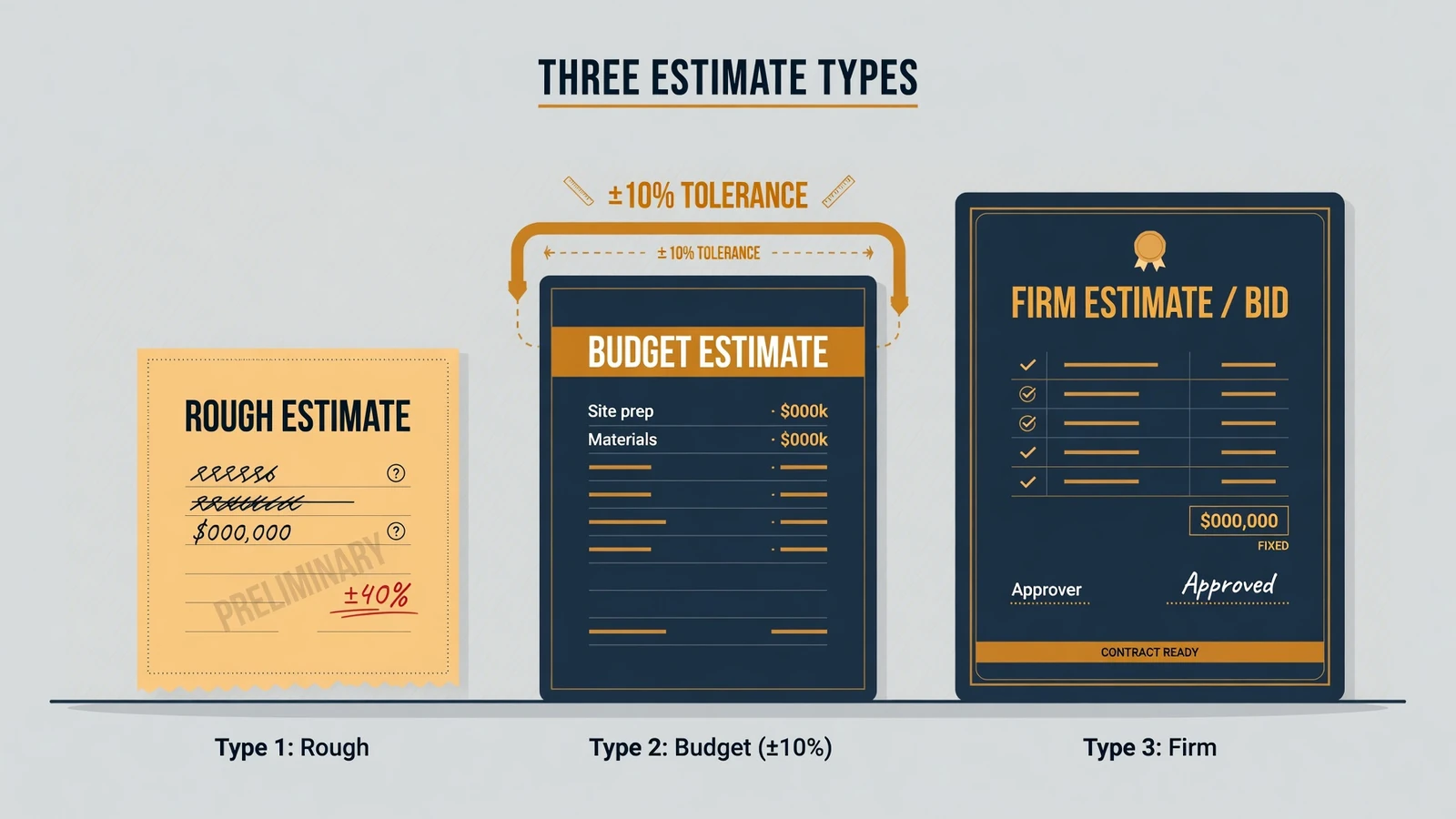
International moving companies rankings say almost nothing about the estimate, and the estimate decides the money: a written one must sit on an inspection, and 1 page of 27 explains what happens when the loaded volume exceeds the survey.
| Estimate | What it guarantees | Payable at delivery | Where the rule applies |
|---|---|---|---|
| Binding | Total will not exceed the estimate | 100% of the estimate | Interstate moves under FMCSA |
| Non-binding | Nothing; it is a projection | Up to 110% at delivery | Interstate moves under FMCSA |
| International ocean quote | Whatever the contract says | Per the contract | Outside the FMCSA rules |
Movers are told plainly by the road regulator that a rate quote is not an estimate and that an estimate must rest on an actual or virtual inspection. A binding estimate guarantees the delivery bill does not exceed it; under a non-binding one the mover may not demand more than 110% at delivery, and the balance is billed afterwards and still owed.
Estimate rules of that kind bind interstate movers, and an international ocean shipment sits outside them — which is exactly why a household should insist on the same standard by contract. A moving company quoting a household by telephone, without seeing the rooms, is quoting a number it can revise at loading. How the volume itself is measured and priced is set out in moving your household goods overseas.
Deposit, hostage load and the complaint nobody counts
International moving companies rankings rarely reach the part where deals break: 12 of 27 pages discuss deposits, 3 mention held shipments, and 4 publish any complaint data. Movers fail in a small number of recognisable ways, and each is visible before the truck arrives.
- The volume re-price. A mover quoting without a survey issues a larger invoice once the crew measures what is actually loaded.
- The hostage load. A disputed invoice becomes leverage the moment the household's belongings are in a warehouse, and 3 of 27 pages in this corpus name the pattern.
- The broker with no assets. The company that quoted subcontracts the whole move, and the crew that arrives has no contract with the household at all.
- The deposit that outlives the service. A large non-refundable deposit taken before any booking exists is a signal, not a formality.
A complaint count means nothing without the number of moves behind it: two complaints across four hundred moves and two across nine are not comparable, so no complaint league table appears here. Costs that arrive after the quote — duty, terminal handling, storage — are set out in the landed cost calculator. Households sending goods without moving themselves are buying a different product; barrel corridors are not covered here yet, and how a move is priced by volume is the nearest published comparison.
Moving companies fail in ways that reviews and forum threads file under scams, and the word flattens four different things. Three of the four patterns above are contract design rather than fraud: a re-price that follows an estimate made without a survey, a deposit taken before any booking exists, and a crew that arrives holding no contract with the household. The fourth, a held load, is the one that converts a billing dispute into leverage. All four are visible before the truck arrives, which is why this page ranks what a household can check rather than publishing a list of movers to avoid.
What we measured in this search result
International moving companies rankings quote prices more carefully than the car shipping ones: 14 of these 27 pages name a dollar figure, and 5 say when the figure was true. SeaRates read the full text of every page ranking in Google US for these 22 queries on 07/26/2026 and counted what each discloses.
| What the page does | Pages | Share |
|---|---|---|
| Names movers individually | 19 | 70.4% |
| Quotes a dollar figure | 14 | 51.9% |
| Dates that figure | 5 | 18.5% |
| Uses the word median | 0 | 0.0% |
| Reports a sample size | 4 | 14.8% |
| Names FIDI or FAIM | 9 | 33.3% |
| Mentions FMC or OTI | 5 | 18.5% |
| Names no regulator at all | 13 | 48.1% |
Five machine matches for a dated price were read individually and one was rejected: the date beside the sum was a review's timestamp rather than the price's. Publishing both the screen count and the verified count is more honest than publishing the flattering one.
For international movers a missing mention is not a missing licence — the sweep counts what pages say, not what companies hold. Country-level pricing, which none of these pages ties to a destination, is not published here either. The bands by destination region, with what sits outside each is as far as the measured corpus goes, and calling a per-country figure published would be the same shortcut this page is auditing.
What this ordering does not measure, and the two rows that would fix it
Ranking by mentions measures publishing, and a household is not buying publishing. The ordering that would answer the actual question needs an ocean licence, an audited accreditation, a rate series and complaints with a denominator. Moving companies can be compared on all four, and SeaRates currently holds neither of the last two — which is why the list above is labelled by what it counts rather than presented as a verdict.
| What a ranking would need | How it is measured | Who can confirm it | Can you check it today? |
|---|---|---|---|
| Ocean licence | Entity present in the FMC OTI list | Federal registry | Yes — free, and this page shows how |
| FAIM accreditation | Membership current in the FIDI directory | Independent audit | Yes — the FIDI directory is public |
| Rate spread | Quotes for an identical inventory and lane | Our own quote array | No — nobody publishes this, us included |
| Complaint rate | Complaints divided by moves | Regulator and company data | No — no denominator is published |
Movers on this page have not been verified one by one, and the check is the next data step rather than a limitation of principle: both registries are open, and the sweep found only 1 page of 27 linking to either. Published vendor bands run $1,500-3,000 for a shared container and $6,000-12,000 for a three-bedroom household as read on 07/25-26/2026, and they are ranges rather than medians. Company profiles are not published yet. Until they are, the road authority and the ocean credential behind any name on this page can be read from the federal registers, and running both checks takes about five minutes.
How we make money
Six mover pages of 27 in this result set say who pays for them. SeaRates is paid nothing by any company in this list — no page here carries a referral link — and rank is never sold: a mover cannot buy a position, a badge, or the removal of a negative finding.
Disclosure sits at 22.2% in this corpus, the highest of the three ranking clusters SeaRates has measured, and still low for pages that decide where a household sends everything it owns. When a ranking does appear here, the fee column will appear beside it.
Sources
- SeaRates measurement of 27 pages across 22 cluster queries, 07/26/2026. Full-text sweep, 120-word minimum; five price-date matches were read individually and one was rejected.
- Company naming frequencies from the highlights of 22 captured search results and the headers of 44 AI answers, read 07/25-26/2026.
- FMCSA, What is a binding move estimate? — written estimate based on inspection, 100% payable under a binding estimate, 110% ceiling under a non-binding one. Read 07/26/2026.
- FMCSA, Liability & Protection — Full Value Protection and Released Value at 60 cents per pound per article. Page updated 11/04/2024, read 07/26/2026.
- Federal Maritime Commission, OTI search application — 3,273 licensed ocean freight forwarder records and 9,030 NVOCC records. Read 07/26/2026.
- Published vendor bands for shared containers and full household loads, collected from the AI answers for the moving cluster. Read 07/25-26/2026.
Corrections to any figure on this page: [email protected].
Frequently asked questions
No page in this search result answers that verifiably, and neither does this one. The lists rank on review platforms, which record the domestic pickup rather than the ocean leg. Compare the ocean licence, the accreditation and the completeness of the written estimate instead.
What is the best international moving company?
No page in this search result answers that verifiably, and neither does this one. The lists rank on review platforms, which record the domestic pickup rather than the ocean leg. Compare the ocean licence, the accreditation and the completeness of the written estimate instead.
What are red flags for moving companies?
A price given without a survey, a large non-refundable deposit before any booking exists, no named entity on the bill of lading, and an unwillingness to say who performs the ocean leg. Each is checkable in one conversation.
How can I avoid being scammed by a moving company?
Insist on a written estimate based on an inspection, confirm which legal entity issues the bill of lading, and look that entity up in the FMC registry. A mover unable to complete those three steps is not yet worth a shortlist place.
Is International Van Lines a reputable moving company?
SeaRates publishes no score for it or for anyone else on this page. What a household can check for any named company is identical: road authority, the FMC status of whoever carries the ocean leg, current FAIM accreditation, and whether the estimate followed a survey.
What is a commonly overlooked cost when moving abroad?
Destination-side charges: terminal handling, customs clearance, the local agent, storage after free time, and delivery above the ground floor. None of them appears in an ocean quote, and duty sits outside all of them.
Do FIDI or FAIM accreditation guarantee quality?
No. FAIM audits process, finances and insurance on a cycle, which is more than a review average does and less than a performance guarantee. Accreditation narrows a shortlist; it does not price a move or promise a transit time.