AnalysisEvery figure with its unit, its date and a linked source
Analysis: what is published here, and what every figure has to carry
An ocean freight rate update is worth reading for what it can prove, and this cluster proves very little. What the sweep of 74 pages found, and what this blog does instead:
- Ocean freight coverage here is dense with numbers and thin with method. 36 pages of the 74 quote a price, 22 pages date it, 29 pages give a forecast and 5 pages explain how they arrived at anything.
- The dating discipline here is the best measured anywhere on this project, at 27.0%, because a rate without a week is worthless and news-shaped writing knows it.
- 3 pages of the 74 both forecast and publish a method. That combination is the standard this blog holds itself to.
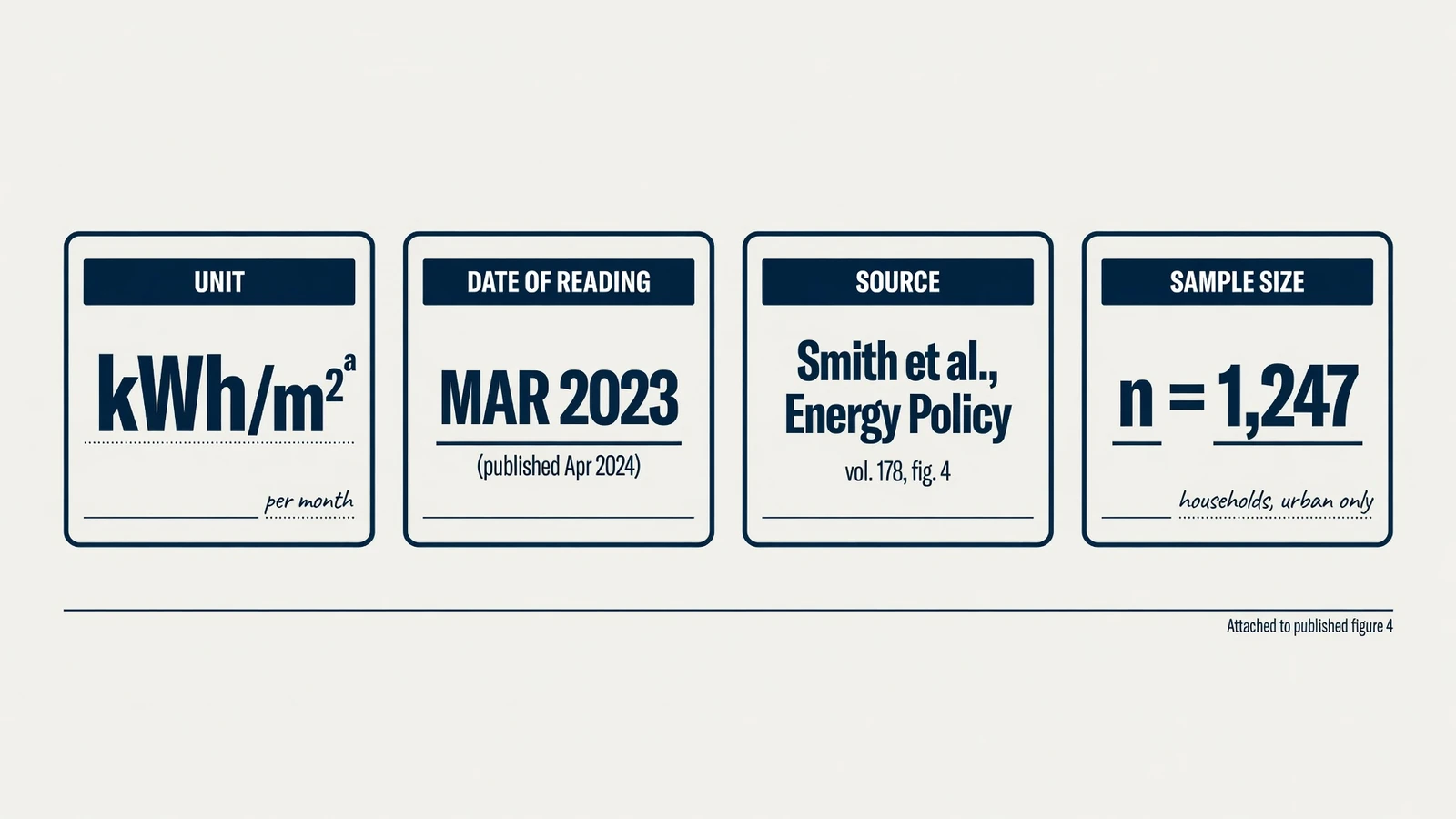
- Every figure published here carries four things: a unit, the date it was read, the source and what kind of source it is, and the scope it was counted over.
- Where two sources disagree, both are printed with attribution. Sea-Intelligence puts May 2026 at 64.7% on time; a Kuehne+Nagel summary gives June 2026 at 56.6% and names April the best month at 62.4%.
- A worked example rather than a promise: Drewry's World Container Index at $4,374 per 40-foot container in the assessment of 07/23/2026, down 4% in a week.
- No median rate report runs yet, because the quote array behind it does not exist. Until it does, an index citation with its assessment date is published instead of a market average presented as our own.
Published so far: 29 articles
Every one carries at least one measurement or primary source of its own, and every figure in it carries the date it was read. The order is by how much search demand the question cluster behind each article holds.
Who is the cheapest freight forwarder, and why no published list can answer it
Sixty-two ranking pages name a cheapest freight forwarder and three publish a method. What actually decides the bill is the scope of the quote, not the company.
How to find a reliable freight forwarder, when reliability is the one thing nobody publishes
Five checks that return a fact rather than an adjective: the licence, the bond, the bill of lading issuer, the exclusions and the validity window. All five are free.
Who is the biggest freight forwarder in the world? It depends which column you read
By ocean containers moved the answer is Sinotrans. By revenue it is DSV. Both come from the same Armstrong & Associates 2025 tables, and they disagree by six places.
Are freight forwarders worth it, or can you do the same work yourself?
A forwarder buys slot access, filings and liability. Below roughly 50 containers a year the margin is real but small against what removing it adds back in work.
How much should I pay to ship a 20ft container, and what the index will not tell you
Drewry assessed a 40ft box at $4,374 on 07/23/2026. A 20ft container is not half that, and the ocean line is 70% of what actually arrives on the invoice.
How to negotiate with a freight forwarder, when half the invoice is not theirs to discount
The federal fees are fixed and the ocean rate is bought, not set. What is negotiable is the handling schedule, the free time and the scope — and scope is worth the most.
What are the top freight companies in the US, when most of the biggest are not American?
Of the nine forwarders in the Armstrong 2025 ocean and revenue tables, two are US-based: C.H. Robinson and Expeditors. The rest lead from Europe and Asia.
Is FedEx considered a freight forwarder, and does the label change anything for you?
Large integrators run parcel networks and forwarding arms under one brand. What decides your liability is which entity issues the bill of lading, not the logo.
What are the common freight mistakes, measured across 2,001 pages that mostly do not mention them?
Comparing quotes of different scopes, assuming free time, treating an index as a price, and skipping the licence check — ranked by what each one costs.
Who is the No. 1 container company, and why your box may sail on someone else’s ship
MSC holds 21.4% of the world fleet against Maersk at 13.8%. But 35.8% of MSC capacity is chartered, and alliances mean the line you booked may not be the line that carries it.
What is the cheapest way to ship a container, and where the LCL saving disappears
LCL bills per cubic metre or per revenue ton, whichever is higher. Past roughly 13-15 CBM a full container usually wins, and CFS charges move the crossover.
How much does a 50 lb package cost to ship, and why this site cannot tell you
A 50 lb parcel is a courier product, priced on chargeable weight by zone. Ocean freight starts around 2 CBM. Here is which market you are actually in.
How much does it cost to ship a 40-foot container internationally, and what the index leaves out
Drewry assessed a 40ft box at $4,374 on 07/23/2026, down 4% on the week. That is a composite across many shippers, and it is about 70% of what the invoice comes to.
Is an NVOCC the same as a freight forwarder? No, and the difference is who is liable
A freight forwarder acts as your agent. An NVOCC issues its own bill of lading and takes on carrier liability. Same federal licence family, different bond, different claim.
How can I reduce container shipping costs, when the ocean rate is the part you least control?
The ocean line is 70% of an FCL total and the least negotiable part of it. Six levers that move real money, ranked by how much they actually move.
What is the cheapest way to ship from China to the USA, by volume rather than by opinion
Under about 2 CBM, air or courier usually wins on total cost. Between 2 and 15, LCL. Above that, a full container. The Incoterm decides who pays what.
What are the disadvantages of LCL shipping, beyond the price per cubic metre?
Consolidation adds a week at each end, a destination CFS charge of $15-165 per CBM that 0 of 23 ranking pages publish, and a shared box where one consignee’s hold delays yours.
Why is shipping from China so expensive, when the ocean rate is only half the bill?
Drewry put a 40-foot container at $4,374 on 07/23/2026. Surcharges, tariffs and destination lines are what makes the delivered total feel unpredictable.
How is LCL calculated, and why the same box can bill two different amounts
LCL bills per cubic metre or per revenue ton, whichever is higher. Work the volume, work the weight, take the larger, then add the charges that do not scale.
Can I negotiate demurrage charges, or is the invoice simply wrong?
Before negotiating, check the invoice against the four tests in the FMC billing rule. An invoice missing a required element carries no obligation to pay.
Do cars get damaged during shipping, and who actually answers for it?
Marine cover runs 1.5-2.5% of declared value and does not include General Average. The condition report at handover is what decides a claim either way.
How much does demurrage cost per day, and why day nine costs more than day six
Published US demurrage runs $75-300 per container per day and steps up in tiers. Free time is typically 3 to 7 days, and detention is a separate invoice.
How do I not get scammed shipping my car? Four checks, none of which costs anything
Deposit taken and booking resold, cloned site, hijacked invoice: the three patterns and the four free federal checks that catch them before the money moves.
How do I know if a freight forwarder is legit, when 2 of 245 pages show a licence number
The federal register answers it in about two minutes. Of 245 ranking pages measured, 2 show an OTI number and 4 point the reader at the database.
What is the average cost of an international move, and why the average is the wrong number
Published bands run $1,500-3,000 for a shared container and $6,000-12,000 for a three-bedroom household. Volume and destination move it more than the mover does.
What is the cheapest way to move internationally, once volume is the unit?
A shared container runs $1,500-3,000 against $6,000-12,000 for a three-bedroom household. Cutting volume before the survey is the only lever that moves both.
How to pick a customs broker, and why no ranking of the best one exists
A customs broker licence is issued by CBP and is a different licence from the FMC ocean credential. Entry preparation runs $100-250. Here is what to check.
What is the average cost of a customs broker, and what the entry fee does not include
Brokerage entry runs $100-250 across 299 measured pages. ISF is billed separately at $35-100, and the federal fees are calculable to the cent.
How much does RoRo shipping cost, and what the published band leaves out
Published RoRo bands run $900-2,500 per car against $3,000-5,500 for a sole-use container, read 07/25-26/2026. Destination charges sit outside both.
742 more are planned across eight hubs and are not written yet. The plan is published below as a plan; an article appears in this list only once it exists.
What the ocean freight rate update market publishes
Ocean freight rate update coverage is dense with numbers and thin with method, and the freight market rewards the opposite. Across the 74 pages SeaRates measured, 36 quote a price and 22 date it — 29.7%, the best dating discipline of any cluster measured across the project — while 29 offer a forecast and 5 explain how they arrived at anything.
| What the page does | Pages | Share |
|---|---|---|
| Names a carrier | 32 | 43.2% |
| Quotes a price | 36 | 48.6% |
| Dates that price | 22 | 29.7% |
| Names a surcharge effective date | 27 | 36.5% |
| Names a surcharge type | 25 | 33.8% |
| Covers US tariff policy | 25 | 33.8% |
| Cites an industry index | 13 | 17.6% |
| Gives a forecast | 29 | 39.2% |
| Publishes a method | 5 | 6.8% |
| Reports a sample size | 0 | 0.0% |
Freight rates get dated in news-shaped writing because a rate without a week is worthless, and the habit is worth borrowing. Analysis-shaped writing forecasts without saying what the forecast rests on, which is worth avoiding.
Three ocean freight pages of 74 do both — forecast and method in the same piece. Their approach sets the standard SeaRates holds itself to here.
Ocean freight rate update answers assembled by Google in this cluster cite the primary publisher more often than the commentary about it, which is unusual — in every other cluster measured on this project the vendor blogs lead. Of the ten domains cited most across the 59 AI answers captured on 07/26/2026, 4 carriers publishing their own advisories account for 21 citations, the customs regulator for 4 and the index publisher for 3 — 28 of the 46 citations those ten domains received between them.
The consequence for any ocean freight piece published here is direct. A piece that restates a carrier's surcharge advisory competes with the advisory itself, which the model is already citing and which will always be more current. What is not already cited is the count across publishers, the disagreement between two of them, and the arithmetic that turns an index level into a delivered cost.
What every figure on this blog carries
Every ocean freight rate update here arrives with four things attached, and a figure missing any of them does not go out.
| Element | Why it is there | Example |
|---|---|---|
| Unit | A number without one is not comparable | $ per 40-foot container, not "the rate" |
| Date of reading | Ocean spot rates move weekly | Drewry WCI at $4,374, assessed 07/23/2026 |
| Source and its nature | Publisher, regulator, vendor or our own count | Sea-Intelligence GLP, issue 178 |
| Scope and window | What was counted and over what period | 74 pages, 32 queries, read 07/26/2026 |
A worked example of a dated freight rate sits here: Drewry's World Container Index stood at $4,374 per 40-foot container in the assessment of 07/23/2026, down 4%. Six weeks from now the sentence is history rather than information, and printing the week beside it is the reason a reader can tell.
These four elements apply to our own counts as well. When SeaRates writes that 5 of 74 pages publish a method, the corpus is named, the threshold is stated at 120 words, and the reading date is given — anyone can repeat the count.
When two sources disagree
Ocean freight rate update material inherits its sources' disagreements, and hiding them would be the easy option. Schedule reliability for mid-2026 is a live example: Sea-Intelligence puts May 2026 at 64.7% and calls it the best month of the year, while a Kuehne+Nagel seaexplorer summary gives June at 56.6% and calls April the best month at 62.4%. Both agree on April.
| Source | Figure | Period | What it calls the best month |
|---|---|---|---|
| Sea-Intelligence, GLP issue 178 | 64.7% | May 2026 | May |
| Kuehne+Nagel seaexplorer summary | 56.6% | June 2026 | April, at 62.4% |
Freight rates and reliability figures are published here with both readings attributed, each period named, and the choice left to the reader — 5 of 74 pages measured explain their method well enough to make that possible. Picking one and presenting it as the figure would be quicker and would defeat the purpose of publishing at all.
Divergence of that size happens because publishers count different vessel sets and define on-time differently. A reader comparing carriers should check which publication a number came from before treating it as settled.

The two formats, and what each promises
Rate reports are numbered and scheduled; explainers are not. Both carry the same evidentiary standard, and they differ in what they claim.
- Numbered reports. A recurring series with a fixed panel, published on a schedule. Each issue states the sample, the collection window and what changed since the previous number. Comparability between issues is the point, so the panel does not change silently.
- Explainers. One-off pieces answering a question the search result answers badly. Each carries at least one measurement or primary source of its own; a piece that only restates what is already published does not run. In the corpus measured here, 13 of 74 pages cite an industry index and not one states the sample behind a figure of its own.
Ocean freight forecasts do not run in either format without the method behind them. Where SeaRates has no data, the piece says so — the phrase "not measured" appears across the project more often than any prediction does.
Regular rate reporting by median is not running yet, and the reason is honest: the quote array behind it does not exist. Until it does, rate material here cites indices with their dates rather than presenting a market average as our own.
How the topics are chosen, and what is still only planned
Ocean freight topics come from a measured pool rather than from a brainstorm, and none of them is a market forecast. The question pool behind this blog holds 4,967 unique People Also Ask questions collected across the project's search results; 2,410 of them survived the filter for noise and for topics already covered by the site's core pages, and those cluster into 771 articles across eight hubs.
| Hub | Articles | Questions |
|---|---|---|
| Freight forwarding | 327 | 961 |
| Carriers and ports | 111 | 402 |
| Car shipping | 83 | 235 |
| China trade | 64 | 224 |
| Customs and duty | 60 | 188 |
| Moving overseas | 54 | 178 |
| Detention and delay | 41 | 117 |
| Licences and fraud | 31 | 105 |
Ocean freight clusters are written in order of summed weight, where weight counts how many different search results a question appeared in — the eight hubs together hold 2,410 questions against the 4,967 collected. A question surfacing in forty results is demand; a question surfacing once is a tail. For scale: the 74 measured pages cover 32 queries between them, while the blog plan answers 2,410.
Ocean freight questions that clustered with nothing — 1,671 of the 4,967 collected — are not counted as covered. They sit in a separate file, sorted by frequency, waiting to be either attached to an article or acknowledged as tail — calling them closed would be the same shortcut refused everywhere else here.
Two ratios fall out of the ocean freight question pool, and neither of them flatters the plan. Of the 4,967 questions collected, 48.5% sit inside the plan as clustered articles, 33.6% clustered with nothing and wait in the tail file, and the remaining 17.8% were removed by the filter as noise or as already answered on a core page. The three shares account for the whole pool, which is the arithmetic a content plan should survive before a word of it is written.
The ocean freight plan is also more concentrated than eight hubs makes it sound: freight forwarding alone holds 42.4% of the planned articles and 39.9% of the questions behind them. The eight hub rows reconcile to 771 articles and 2,410 questions exactly rather than approximately, and across the whole plan an article answers 3.1 questions on average — the number that decides whether an article has enough to say or is a heading in search of a subject.
Ocean freight demand around this hub was read again on 07/28/2026 through the fan-out evidence map, and the result is a check on the plan rather than a gap in the page. Of 147 subqueries carrying a confidence of 0.6 or better, 99 are not answered by this hub at all — and 64 of those 99 are dated market events: a general rate increase announced for a month, a peak season surcharge on one trade, blank sailings, a canal restriction, a tariff action with a section number.
Ocean freight events of that shape do not belong on a hub, because a hub that answered them would be out of date the week after it was written. They belong to individual dated reports, which is what the 771-article plan above exists to carry. The largest non-event cluster left over is the customs bond — what the amount is, how it is calculated, how long one takes to obtain — and the plan already assigns that to the customs and duty hub.
Where each article sends the reader
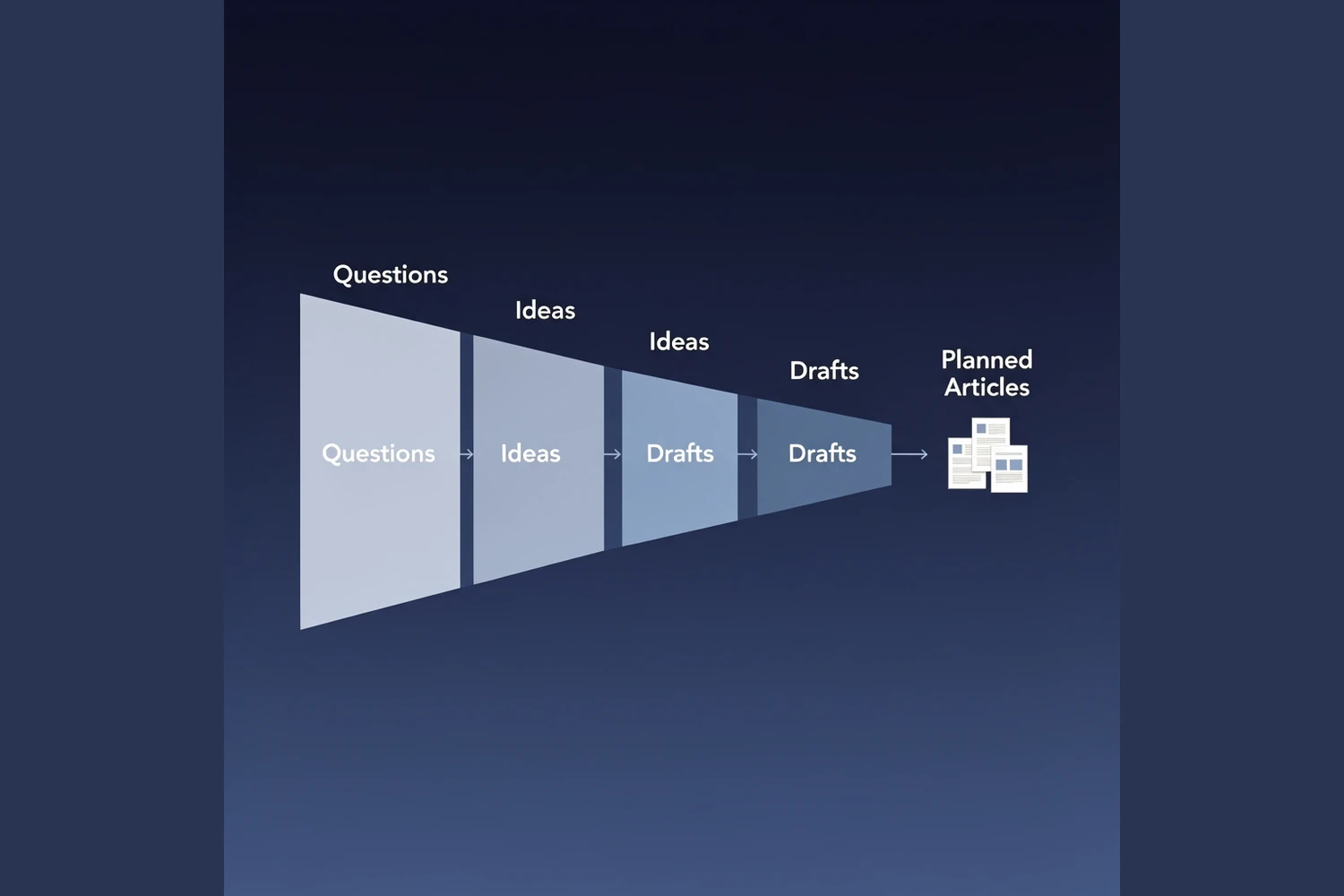
Every ocean freight article here ends in the same three places, because a question about freight almost always resolves into three: what the number is, who would do the work, and whether that company is who it says it is.
Ocean freight questions routed that way — question, figure, provider, verification — make the blog useful rather than decorative, and 13 of the 74 pages measured cite any industry source at all. A reader who arrives at an explainer about detention should leave knowing how the demurrage and detention clock runs; one reading about quotes should leave with the cost of the container door to door; anyone about to book should leave with the licence and bond behind the company name.
Comparisons of providers live on their own pages: what the forwarder league tables measure for intermediaries and which ocean carrier actually runs your box for the lines themselves.
Ocean freight questions resolve into three, and each one has a destination that is not this page:
| What the reader arrived with | What they should leave knowing | Where that lives |
|---|---|---|
| What does it cost? | The figure, its unit and the week it was read | The dated report or explainer carrying it |
| Who would do the work? | Which market the shipment belongs to, and who is ranked in it | The ranking page for that market |
| Is this company who it says it is? | The licence, the legal entity behind the brand, and the bond | The verification page |
An ocean freight article that answers only the first question sends a reader to a quote it cannot check, which is the failure mode this whole cluster runs on.
Sources
- SeaRates measurement of 74 pages of ocean freight coverage across 32 cluster queries, 07/26/2026. Full-text sweep, 120-word minimum.
- Drewry World Container Index, $4,374 per 40-foot container, assessed 07/23/2026, down 4%.
- Sea-Intelligence, Global Liner Performance issue 178 — global schedule reliability 64.7% for May 2026; issue 177 gives 62.4% for April.
- Kuehne+Nagel seaexplorer schedule reliability summary — 56.6% for June 2026, April named best month at 62.4%. Published here alongside the figure above rather than instead of it.
- Content plan of 771 articles in eight hubs, built from 4,967 collected questions; 1,671 unclustered questions held separately and not counted as covered.
Corrections to any figure on this page: [email protected].
Frequently asked questions
Spot rates move weekly, which is why an index print carries its week: Drewry's WCI was $4,374 per 40-foot container in the assessment of 07/23/2026, down 4%. Of the 74 pages measured in this search result, 29 forecast and 5 explain their method — SeaRates will not add to the first group without joining the second. A general rate increase is a carrier-announced uplift with a stated effective date; 27 of the 74 pages measured name such a date.
How often do ocean freight rates change?
Spot rates move weekly, which is why an index print carries its week: Drewry's WCI was $4,374 per 40-foot container in the assessment of 07/23/2026, down 4%. Contract rates move on their own cycle and do not track the index closely.
Does SeaRates forecast rates?
Not without a published method. Of the 74 pages measured in this search result, 29 forecast and 5 explain their method — SeaRates will not add to the first group without joining the second.
What is a GRI and when does it take effect?
A general rate increase is a carrier-announced uplift with a stated effective date; 27 of the 74 pages measured name such a date. The date matters more than the amount, because an increase announced and then withdrawn is common.
Why do two reports give different schedule reliability numbers?
Because publishers count different vessels and define on-time arrival differently. Sea-Intelligence put May 2026 at 64.7%; a Kuehne+Nagel summary gives June at 56.6% and April as the year's best at 62.4%. Both figures appear here with their sources.
How are blog topics selected?
From 4,967 questions collected across the project's search results, filtered to 2,410 and clustered into 771 articles in eight hubs. Order follows how many different search results each question appeared in.
Can I reprint a chart or figure from here?
Yes, with attribution to SeaRates and a link to the page carrying the figure, and provided the reading date stays attached to the number. A figure republished without its date stops being true quite quickly.