Market audit23 ranking pages read · what none of them publishes
What LCL consolidators rankings measure, and where the quote stops matching the invoice
LCL consolidators rankings compare the ocean leg and stop there, while three separate parties bill the rest of the move. What the sweep of 23 pages found:
- LCL is priced per cubic metre and invoiced by three parties. The consolidator bills the ocean leg, the destination terminal bills deconsolidation and storage, and the customs broker bills the entry.
- The published band runs $100-300 per CBM, against $1,200-2,500 for a 20-foot container on the same route, which puts the crossover at roughly 12-15 CBM.
- Nobody publishes a method. 19 pages of the 23 name companies individually, 1 page shows a score, and 0 pages publish either a ranking method or a sample size.
- The charge that decides most shortlists is never published. 0 pages of the 23 publish a destination CFS charge list, and 10 pages name the CFS handover step at all.
- Consolidation costs one to two weeks against a full container on the same lane, and 12 pages of the 23 quote a transit figure without reporting the shipments behind it.
- Liability sits with an NVOCC, and 2 pages of the 23 mention that licence. The $75,000 NVOCC bond is a shared pool across all claimants rather than insurance on your consignment.
- SeaRates publishes no score for any consolidator here, because a rate spread needs a quote array this project has not collected.
What the LCL consolidators rankings are built on
LCL consolidators rankings are built on nobody's stated criteria. Less-than-container loads move into the USA through the same terminals as full containers, and the companies arranging them are compared on nothing published. Of 23 pages ranking for these queries, 19 name companies individually, 1 shows a score, and none publishes a method or a sample size.
| What the page does | Pages | Share |
|---|---|---|
| Names companies individually | 19 | 82.6% |
| Names a transit time | 12 | 52.2% |
| Names the terminal handover step | 10 | 43.5% |
| Names the pricing unit (CBM) | 8 | 34.8% |
| Quotes a price | 7 | 30.4% |
| Dates that price | 1 | 4.3% |
| Says a forwarder is FMC-licensed | 3 | 13.0% |
| Prints the FMC licence number | 1 | 4.3% |
| Publishes a ranking method | 0 | 0.0% |
Consolidators recurring most across the 21 queries are Kuehne+Nagel (10), DHL Global Forwarding (10), ECU Worldwide (8), CEVA Logistics (8) and Vanguard Logistics Services (8). Naming frequency is not a score, and in this cluster it largely tracks who sells the service as a branded product.
Half the corpus names a transit time and a third names the unit of price. Almost nothing connects the two, which is where a reader's understanding of an LCL quote usually stops. The full-container scorecard is built the same way and sits under what the forwarder league tables measure: 62 pages read, 3 with a method.
Consolidators named in this cluster, counted two ways and checked against the federal register on 07/28/2026. The first column counts the 21 query highlights; the second counts the 12 pages captured in full, which is a different measurement and gives a different order:
| Consolidator | In 21 query highlights | In the 12 pages read in full | What the FMC register shows |
|---|---|---|---|
| Kuehne+Nagel | 10 | 1 | KUEHNE + NAGEL INC., OTI licence 001162, both roles, $75,000 NVOCC bond and $50,000 forwarder bond with Lexon, renewal 28.02.2027 |
| DHL Global Forwarding | 10 | 1 | Registered as a trade name of DANZAS CORPORATION, OTI licence 000315, both roles, $75,000 NVOCC bond, renewal 31.05.2029 |
| ECU Worldwide | 8 | 2 | Present as ECU-LINE N.V. of Antwerp, organisation 026842, trading as ECU WORLDWIDE (BELGIUM) N.V. — a registered foreign NVOCC with no licence number, registration due 29.08.2026, bond $150,000 with United States Fire Insurance in force since 02.05.2016 |
| CEVA Logistics | 8 | 1 | CEVA FREIGHT, LLC, OTI licence 021430, forwarder role only — no NVOCC role on that entity, $50,000 bond, renewal 31.10.2026 |
| Vanguard Logistics Services | 8 | 5 | VANGUARD LOGISTICS SERVICES (USA), INC. of Cypress CA, licensed NVOCC 017237, $75,000 bond with American Alternative Insurance since 13.08.2014, renewal 31.07.2029, trading also as Direct Container Line, Conterm Consolidation Services, Ocean World Shipping and six other names |
| Shipco Transport | — | 2 | SHIPCO TRANSPORT INC. of Hoboken NJ, licensed NVOCC 008352, $75,000 bond with Southwest Marine and General since 10.06.2017, renewal 28.02.2027 |
| CWT Globelink | — | 1 | Not found under that name. A GLOBELINK LOGISTICS INC of Lakewood NJ holds licence 022952 in both roles, bonds $75,000 and $50,000 with Southwest Marine and General since 08.03.2021, and the register does not tie it to CWT Globelink |
Two consolidator rows repay a second look. The register lists DHL Global Forwarding as a trade name of Danzas Corporation, so that brand maps to a licence cleanly — which is not something every brand in this market does. And CEVA Freight, LLC carries the forwarder role without the NVOCC one, so that entity does not issue its own house bill of lading; whether the group arranges LCL through another licensed entity is a question this row does not answer, and it is worth asking before booking.
The two ways of counting consolidators disagree, and the disagreement is the point. The brands that dominate the search highlights are the large forwarders, while the pages that actually discuss consolidation name Vanguard and Shipco most often. A ranking built on either column alone would be a ranking of a different thing.
LCL consolidation has one structural axis that this corpus almost never names: whether the operator is neutral. A neutral consolidator sells space only to freight forwarders and NVOCCs and does not solicit the shipper directly, so it does not compete with the customer that hands it the cargo; a non-neutral one sells to both. The AI answers assembled for these queries organise providers by exactly that distinction, and of the 12 pages SeaRates captured in full, 1 page explains it — a single trade article describing operators as neutral because they carry the cargo of competing forwarders in the same container.
SeaRates does not classify the consolidators above as neutral or not, because that status is a matter of each operator's own sales policy and belongs in writing from the operator rather than in a table assembled from search results. Asking the question is free, and the answer changes who the counterparty is: a forwarder buying from a neutral consolidator is buying from a supplier, and a shipper buying from a non-neutral one is buying from a company that also sells to its own forwarder.
The unit that the price is built on
Space is sold by the cubic metre, and the published band in this corpus runs $100-300 per CBM as a general guide, with $80-150 per CBM quoted on a Pacific lane. A full container on the same route was published at $1,200-2,500 for a 20-foot box, which is the arithmetic that decides when consolidation stops making sense.
| Shipment | Typical unit | Published band | When it stops being cheaper |
|---|---|---|---|
| LCL, per cubic metre | CBM | $100-300 | Above roughly 12-15 CBM |
| FCL 20ft | Whole container | $1,200-2,500 | — |
| Booking limits, one carrier | Per package and per booking | 3,000 kg and 29 CBM per package; 20,000 kg and 60 CBM per booking | — |
LCL consolidators measure chargeable volume after loading, not from your packing list. The operator prices whichever is greater — volume or weight equivalent — so cargo that is dense or awkwardly packed rises in price after it is already in the terminal.
Bands like these are published ranges and not medians of paid invoices. SeaRates holds no quote array for LCL and says so rather than presenting a vendor range as a market rate.
Where the LCL saving stops and a full container starts winning is arithmetic rather than opinion: the crossover sits around 13-15 CBM and moves with density, and the destination CFS charge is what usually decides it.
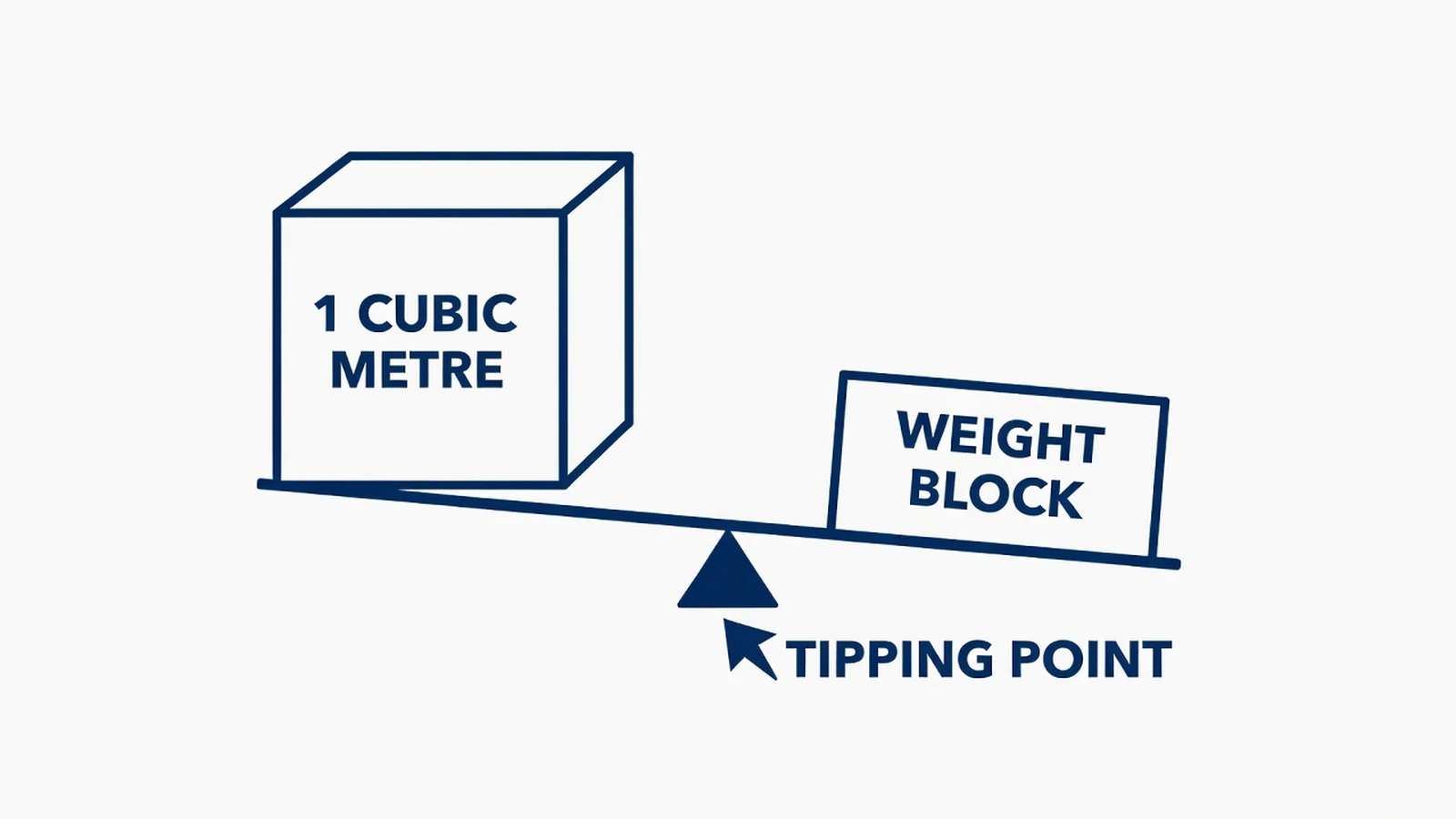
Where the quote stops and the invoice continues
LCL consolidators rankings compare the ocean leg and stop there, while three separate parties bill the rest. Cargo is grouped and sealed at a container freight station on the origin side, then stripped at a terminal on arrival — and the terminal charging for that work is not the company that sold the freight.
Ten of 23 pages name the CFS step at all. The charges that follow it — deconsolidation, handling, documentation, storage after free time — belong to the destination terminal's tariff, and the consolidator neither sets them nor absorbs them.
CBM pricing leaves two practical consequences with the shipper. Compare LCL quotes only with the destination charge list attached, because the per-CBM number is the smaller half of many invoices. And treat storage as a live risk: free time at the arrival terminal is short, and how the demurrage and detention clock runs applies to LCL cargo the same way it applies to a full container. On the China trade the same gap opens inside DDP quotes, and who files the entry on a DDP shipment reads the 31 pages ranking on that lane.
The same four parties, and which of them the LCL quote actually covers:
| Party | What it bills | Inside the quoted CBM rate? |
|---|---|---|
| The consolidator | The ocean leg, priced per cubic metre | Yes — this is the quoted number |
| The origin container freight station | Grouping and sealing the container | Usually, folded into the origin charge |
| The destination terminal | Deconsolidation, handling, documentation, storage after free time | No — its own tariff, which it sets and collects |
| Your customs broker | The entry | No |
Only the first row is what a consolidator quotes on, and 0 of the 23 pages measured publish the third row's tariff at all.
What consolidation does to the schedule
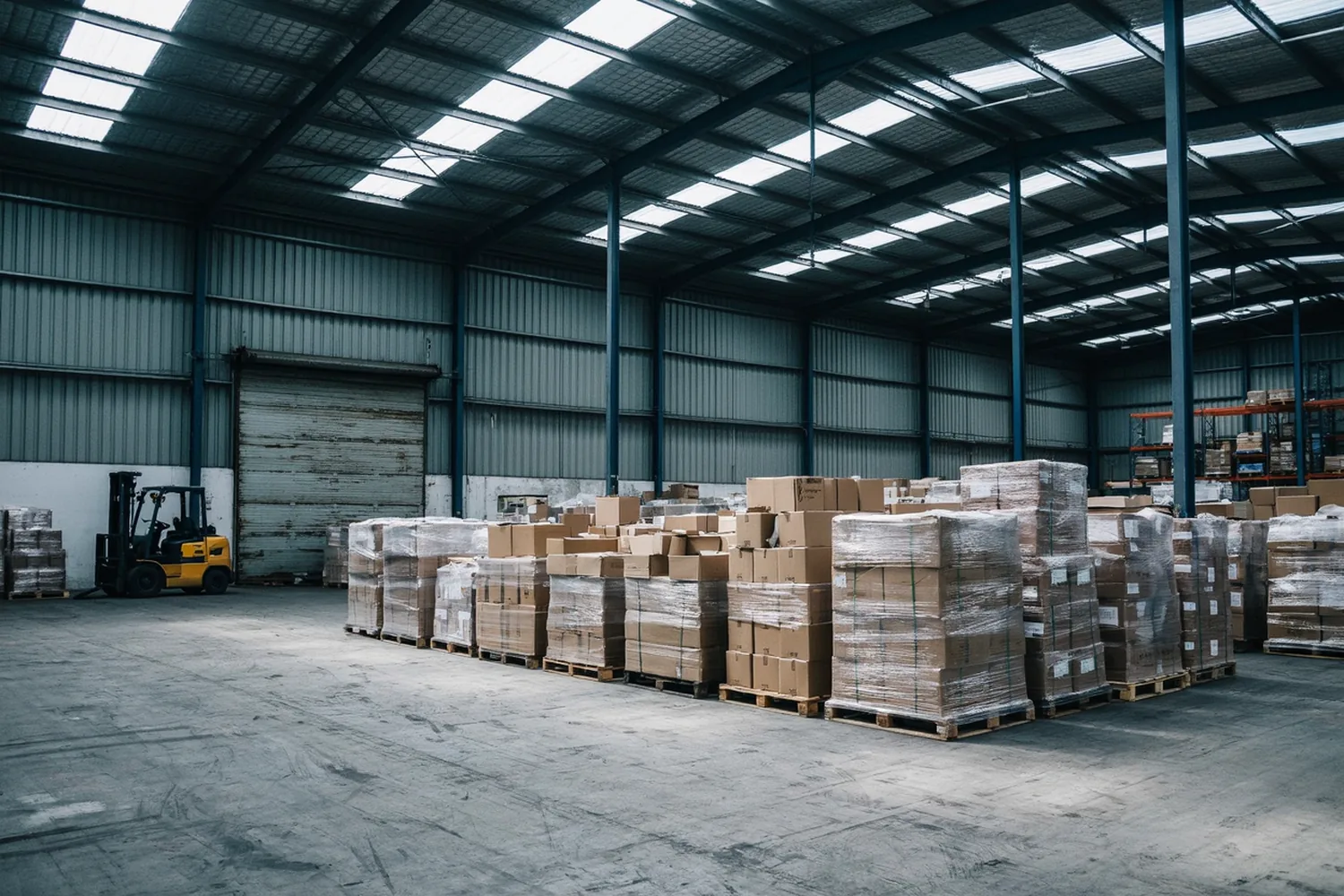
LCL consolidators add one to two weeks against a full container on the same lane, according to the pages in this corpus that discuss it — 12 of 23 name a transit figure at all. The origin terminal waits for enough cargo to fill the box, and the destination terminal has to strip it before anyone's goods are released.
| Stage | Who controls it | Typical effect on the clock |
|---|---|---|
| Waiting for the box to fill | Origin consolidator | Days to two weeks |
| Ocean transit | Carrier | Same as FCL on the lane |
| Deconsolidation at destination | Destination terminal | Days, plus queue |
| Customs entry | Your broker | Hours to days, longer on exam |
Twelve of 23 pages name a transit figure and none reports the shipments behind it. A number without a sample is a marketing average, and on LCL the spread is wider than on FCL because two extra queues sit inside it.
CFS queues cannot be compressed; an honest operator can only tell you where the cargo is. Asking which sailing the container is booked against, and when the CFS cut-off falls, produces a date that means something — unlike a published transit range. Sellers consolidating into Amazon warehouses add an appointment to that queue: which forwarders handle FBA prep and appointments covers the 9 pages ranking for it.
What we measured, and how we would rank
LCL consolidators rankings would need four rows to be verifiable, and SeaRates holds none of the last two. The audit above is what the search result contains.
| What a ranking would need | How it is measured | Who can confirm it | Can you check it today? |
|---|---|---|---|
| NVOCC licence | Entity present in the federal lists | Public registry | Yes — free, and this page shows how |
| Own terminal network | Sites operated rather than resold | Company filings and tariffs | Partly — tariffs are public, ownership often is not |
| Destination charge list | Full tariff published before booking | The consolidator itself | Yes — request it in writing before booking |
| Rate spread | Quotes for identical volume and lane | Our own quote array | No — nobody publishes this, us included |
CFS charges at destination are the row that would change most shortlists, and 0 of the 23 pages measured publish them. What the delivered total contains, line by line, is set out under duty and customs fees on top of the freight.
Sources
- SeaRates measurement of 23 pages of LCL consolidator coverage across 21 cluster queries, 07/26/2026. Full-text sweep, 120-word minimum.
- Published LCL bands and booking limits from the pages in that corpus, including a carrier's own limits of 3,000 kg and 29 CBM per package and 20,000 kg and 60 CBM per booking. Read 07/26/2026.
- Company naming frequencies from the highlights of 21 captured search results, read 07/25-26/2026.
- Federal Maritime Commission, OTI search application — 3,273 licensed ocean freight forwarder records and 9,030 NVOCC records. Read 07/26/2026.
- Federal Maritime Commission, final rule on detention and demurrage billing practices, in force 28.05.2024. Inherited from the project fact store.
Corrections to any figure on this page: [email protected].
Frequently asked questions
Published bands in this corpus run $100-300 per cubic metre generally, and $80-150 on one Pacific lane, read 07/26/2026. Below roughly 12-15 CBM on most routes, using the published bands above: a 20-foot container was quoted at $1,200-2,500 on the same route. No page in this search result answers that with a published method, and neither does this one.
What is the best LCL consolidator?
No page in this search result answers that with a published method, and neither does this one. The names appearing most often are Kuehne+Nagel, DHL Global Forwarding, ECU Worldwide, CEVA and Vanguard — a frequency count rather than a ranking.
How much does LCL cost per CBM?
Published bands in this corpus run $100-300 per cubic metre generally, and $80-150 on one Pacific lane, read 07/26/2026. Those are vendor ranges rather than medians, and they exclude destination terminal charges.
When is LCL cheaper than a full container?
Below roughly 12-15 CBM on most routes, using the published bands above: a 20-foot container was quoted at $1,200-2,500 on the same route. The break point moves with the lane and the season, so calculate it per shipment.
Why is my LCL invoice higher than the quote?
Usually two reasons: chargeable volume measured after loading rather than from your packing list, and destination terminal charges billed by the party that deconsolidates the container. Ask for both before booking.
How much longer does LCL take?
One to two weeks more than FCL on the same lane, according to the pages here that address it — consolidation at origin and deconsolidation at destination. SeaRates has not measured a median and does not repeat vendor transit ranges as fact.
Who is liable if my cargo is damaged in a shared container?
Whoever issued the bill of lading you hold. An operator acting as NVOCC carries carrier liability; a forwarder reselling it acts as your agent. Check which entity signed the document before you need the answer.